BrightSign: A Human Idea, Brought to Life With AI
Four Ideasicle Experts helped BrightSign turn a technology story into a human one. Then two of them produced the campaign entirely with AI.
How do you make someone care about the technology behind a screen? You could explain what the technology does. Or you could show what it makes possible for the person standing in front of it.
That was the creative opportunity with BrightSign. And the answer became a campaign idea we called “The Moment Engine.”
The technology was impressive. The story needed to be human.
BrightSign is a purpose-built digital signage platform, with media players and software for retail, hospitality, healthcare, transportation, and other physical environments. Reliability, security, flexibility, and performance are all part of the story. But the experience visionaries who could benefit most from the platform were largely unaware of the brand.
The assignment wasn't simply to make a better technical argument. It was to make BrightSign the obvious choice for creative visionaries to bring into the conversation with IT and operations from the beginning. We needed to show how the technology could protect and realize a creative vision, not just satisfy a list of specifications.
In other words, don't just sell the equipment. Help people imagine the experience.
Four brilliant creatives. Twenty-four ideas.
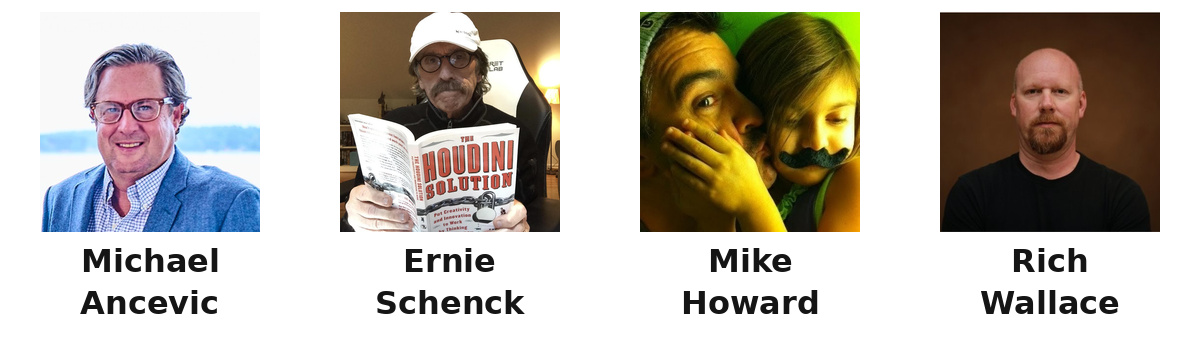
IX Concierge projects revolve around our proprietary IX App, which allows users to bring any four people in the world together virtually to brainstorm against a brief. With it, we brought together four brilliant Ideasicle Experts: Michael Ancevic, Ernie Schenck, Mike Howard, and Rich Wallace. Working from the BrightSign creative brief, they developed 24 campaign ideas across two rounds. But the number only tells part of the story.
Inside the Ideasicle X platform, these four weren’t working in isolation and handing in separate assignments. They were posting ideas, reacting to one another’s thinking, and building on each other’s ideas. One person’s starting point became another person’s springboard. The value wasn’t just four talented minds on the brief. It was what happened between them.
That’s the part of the process I love. An idea doesn’t have to arrive fully formed to be useful. It can spark a different angle, a sharper thought, or an entirely new direction in someone else. With four of them chomping on the problem, the ideas came swiftly. Twenty-two ideas gave BrightSign a real range of possibilities.
We weren't starting with an AI production tool and asking what it could make. We were starting with a marketing problem and asking experienced creative people to find the idea. Better yet, we briefed the team of four about the parameters of AI production in advance. That way they didn't come up with ideas that would be impossible to execute with the AI tools available at the time.
The ideas: Round 1
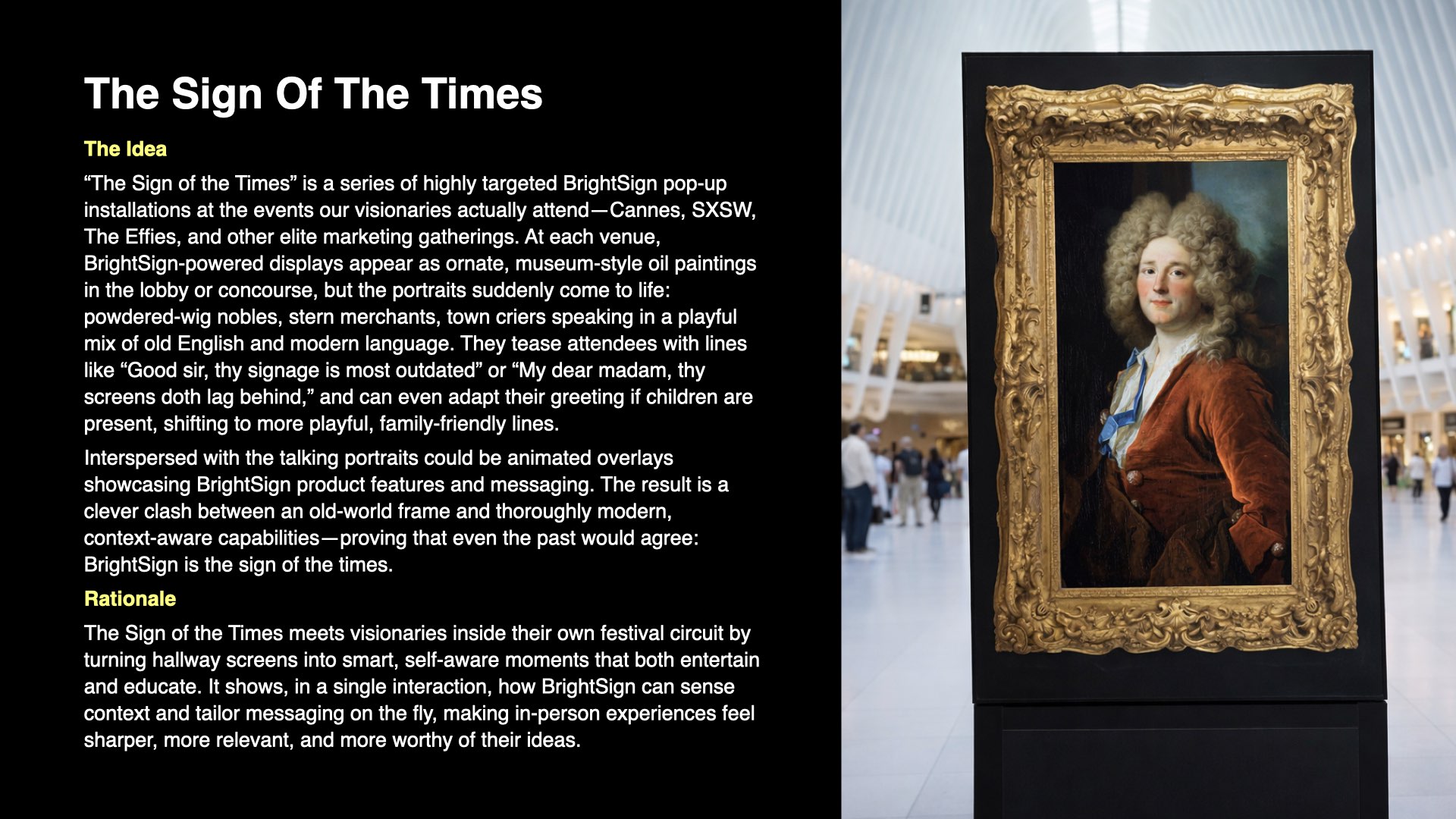
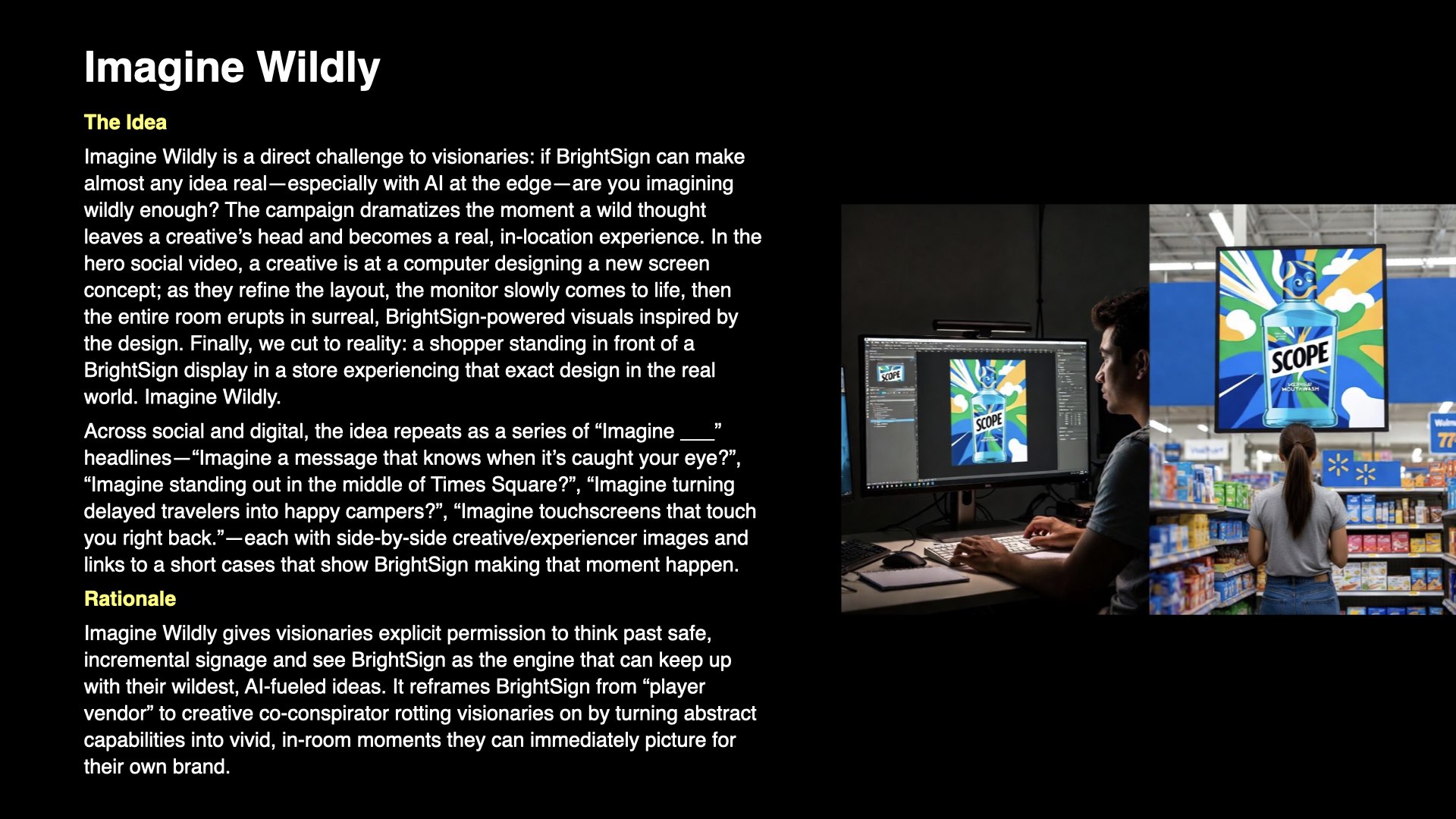
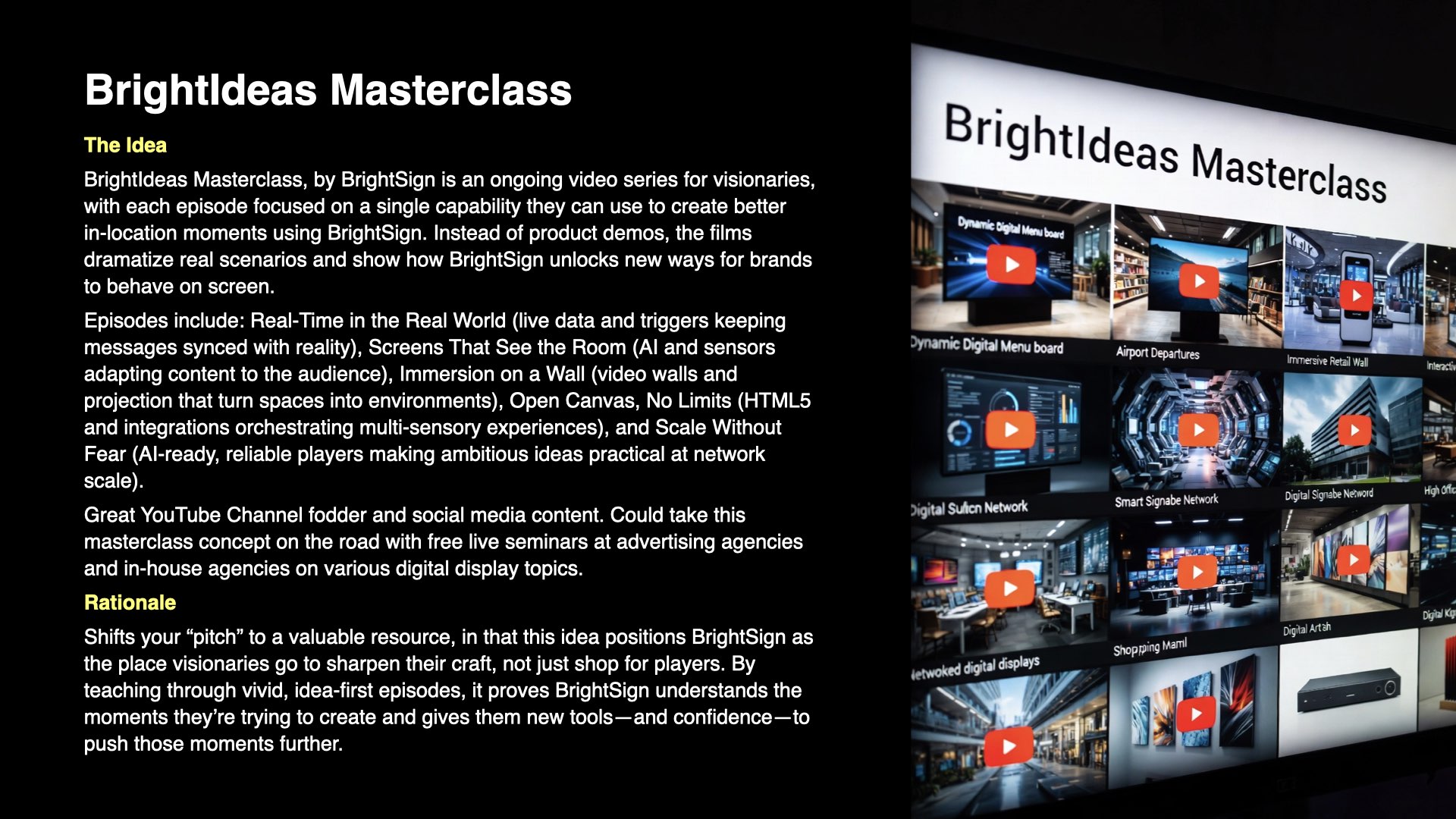
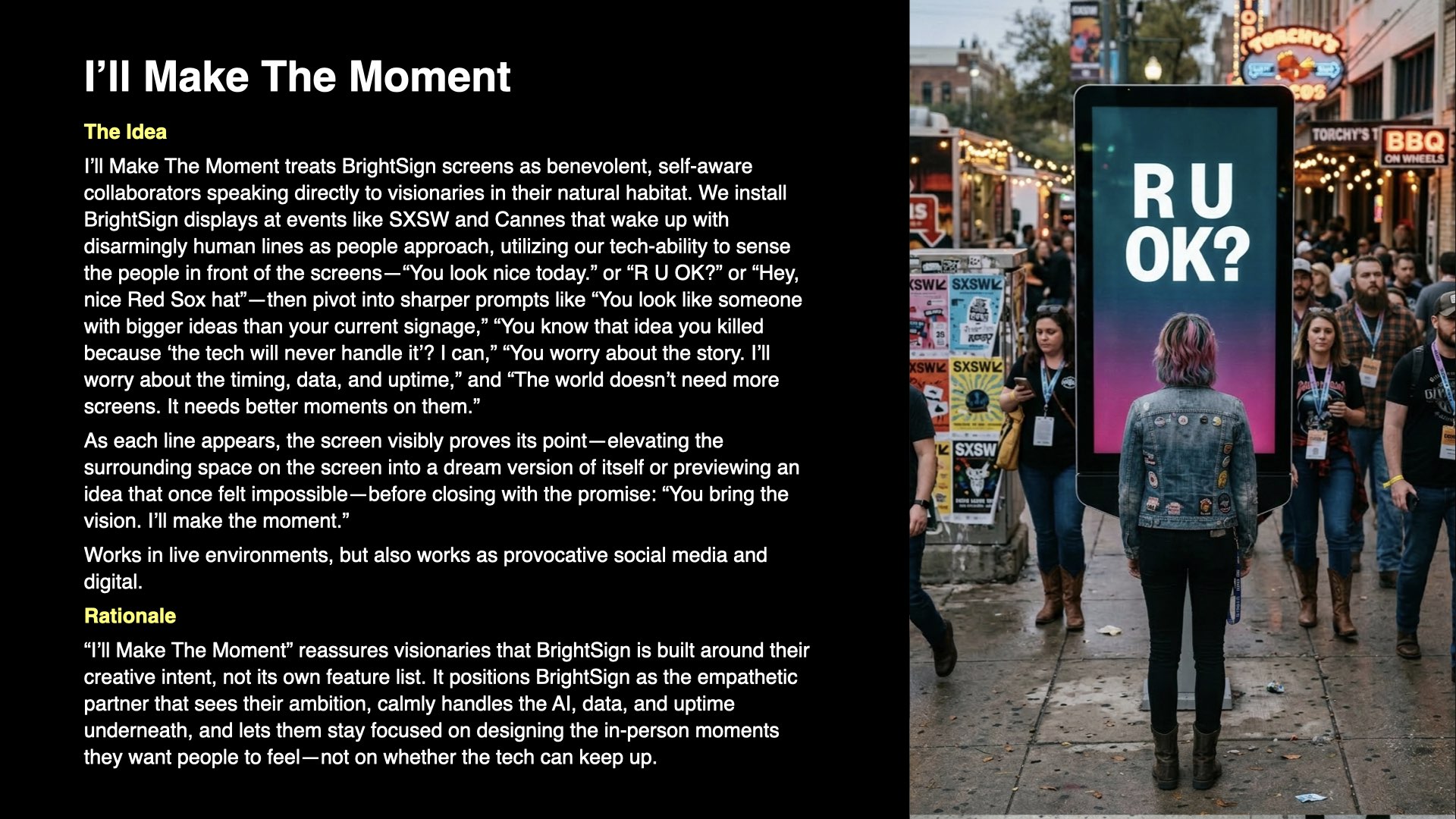
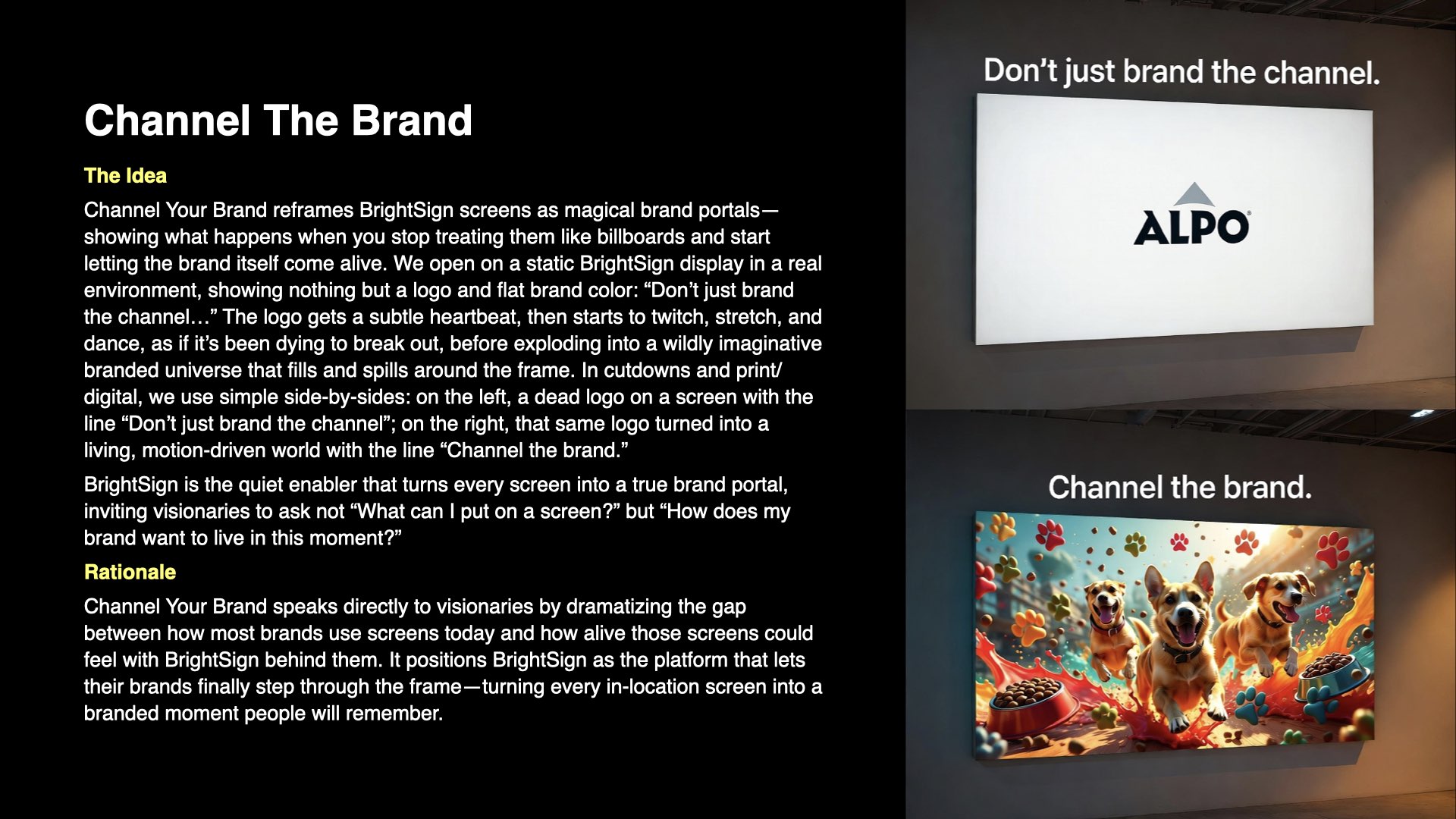
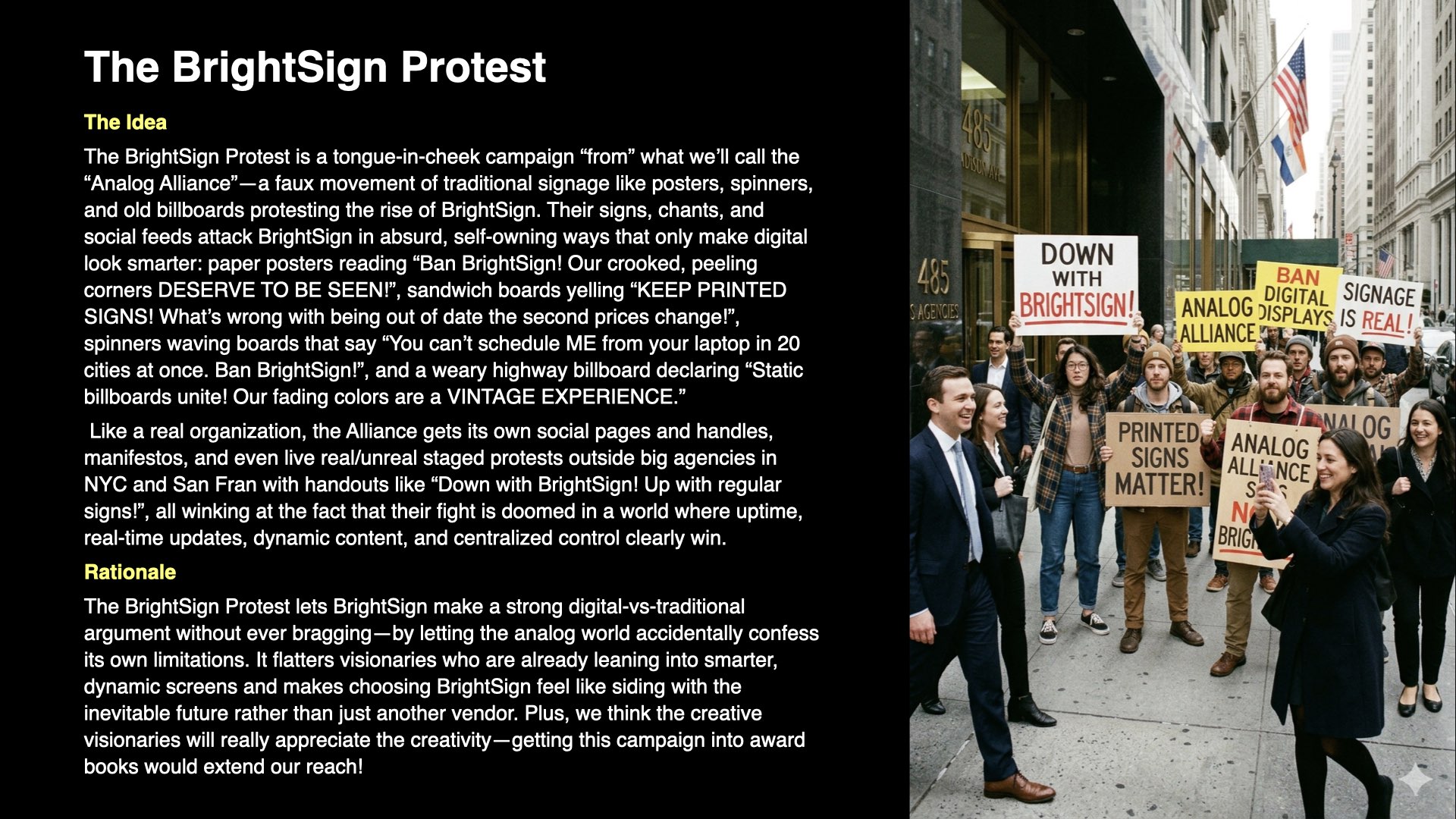
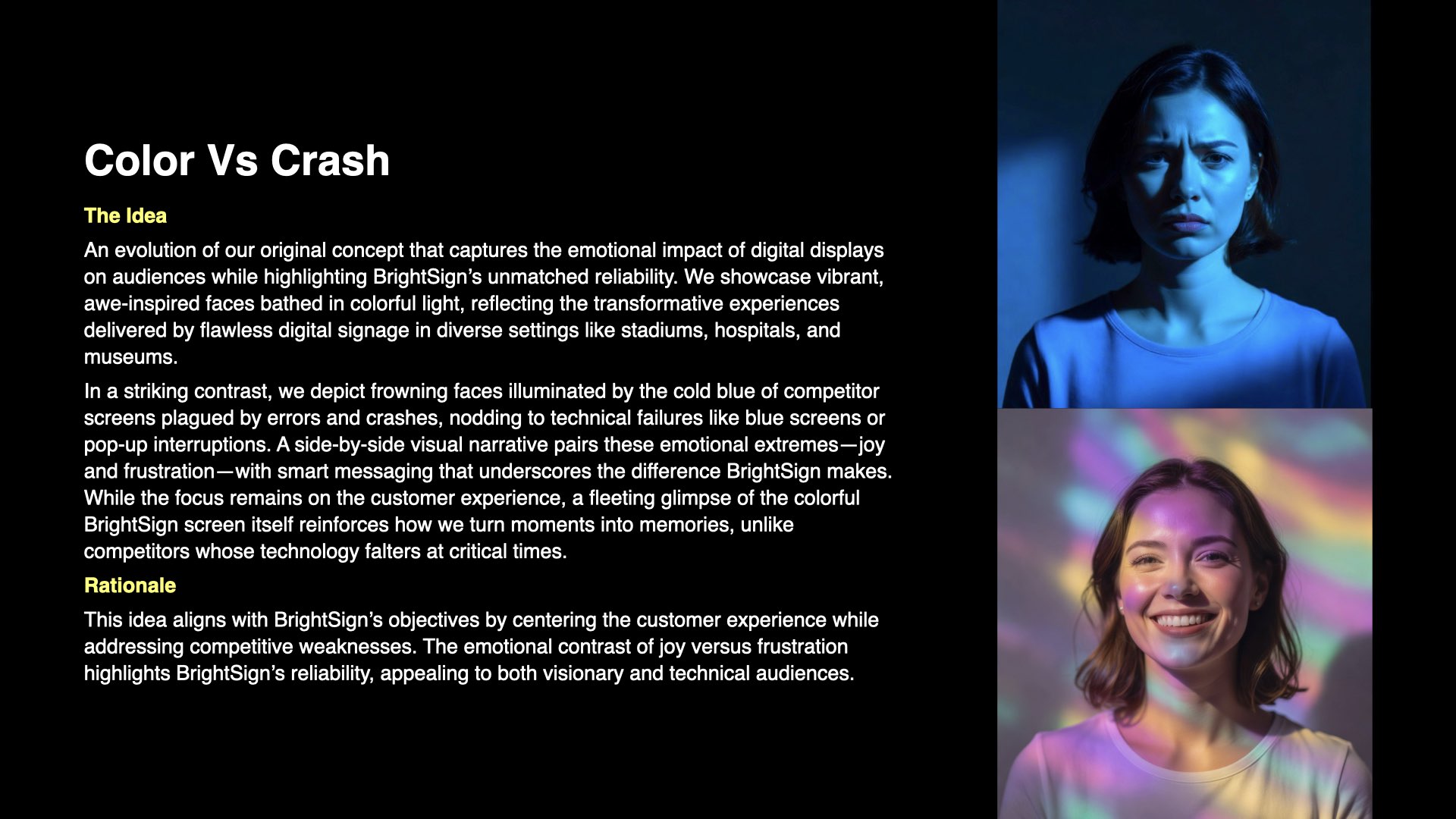
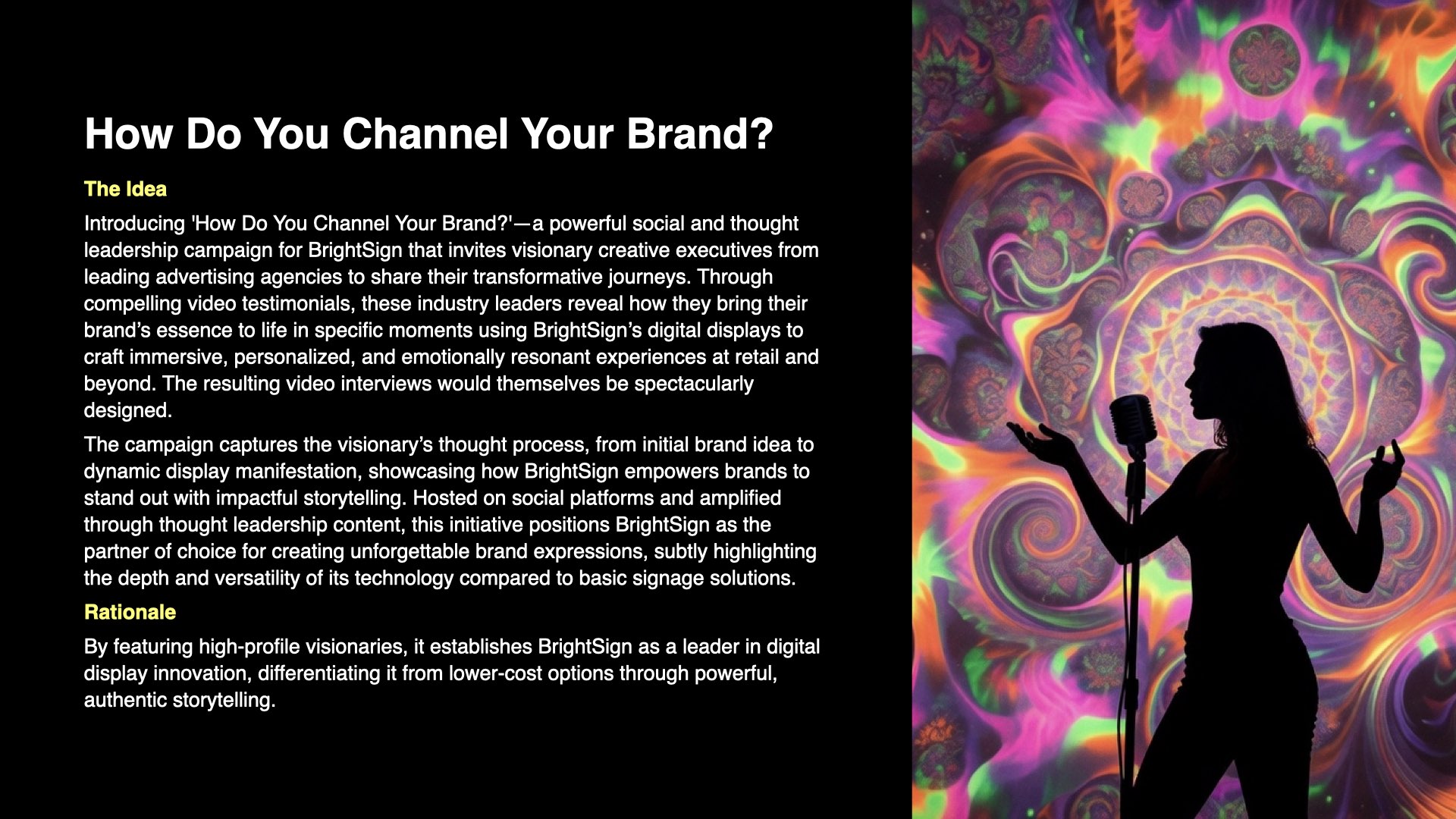
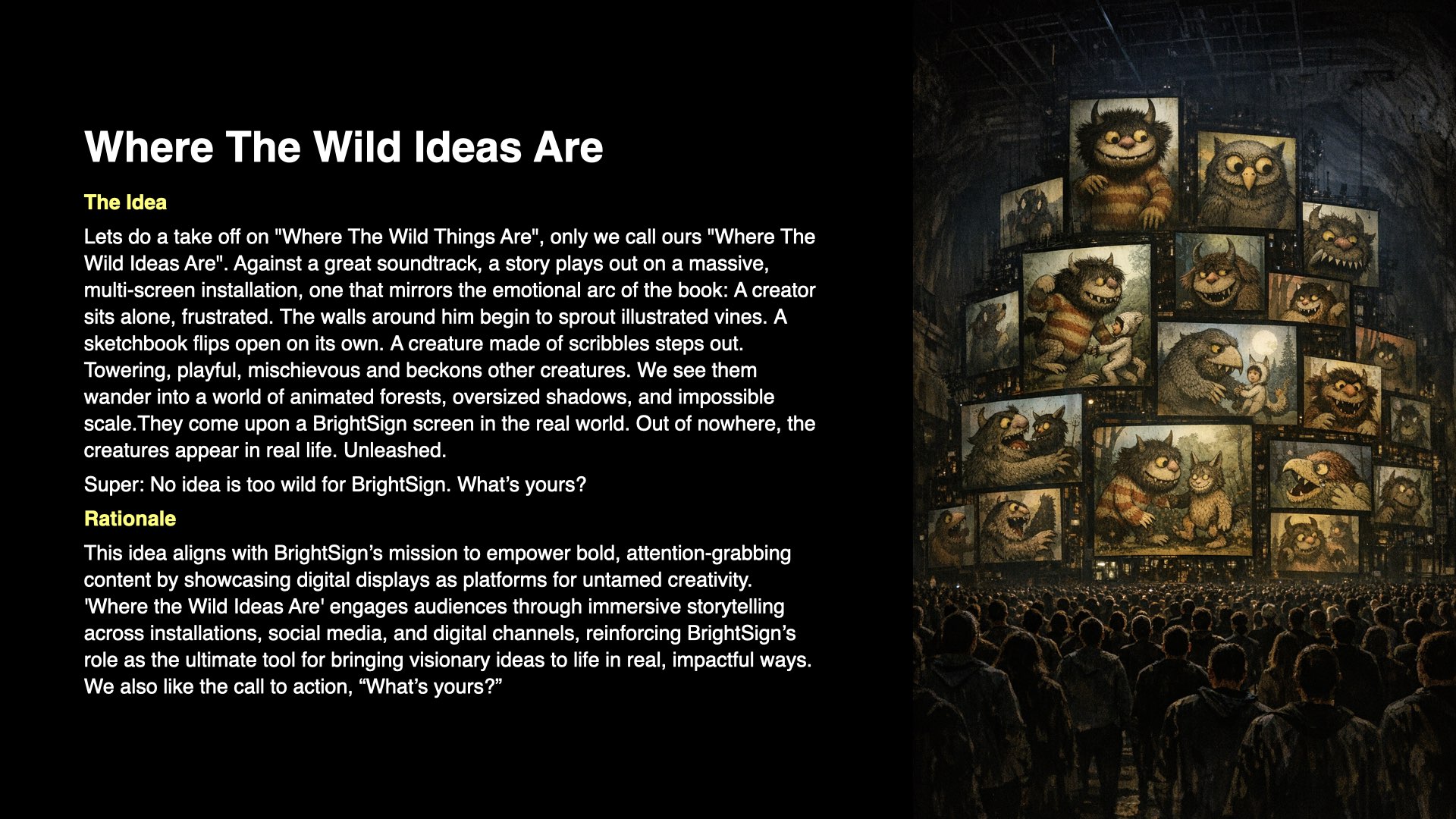
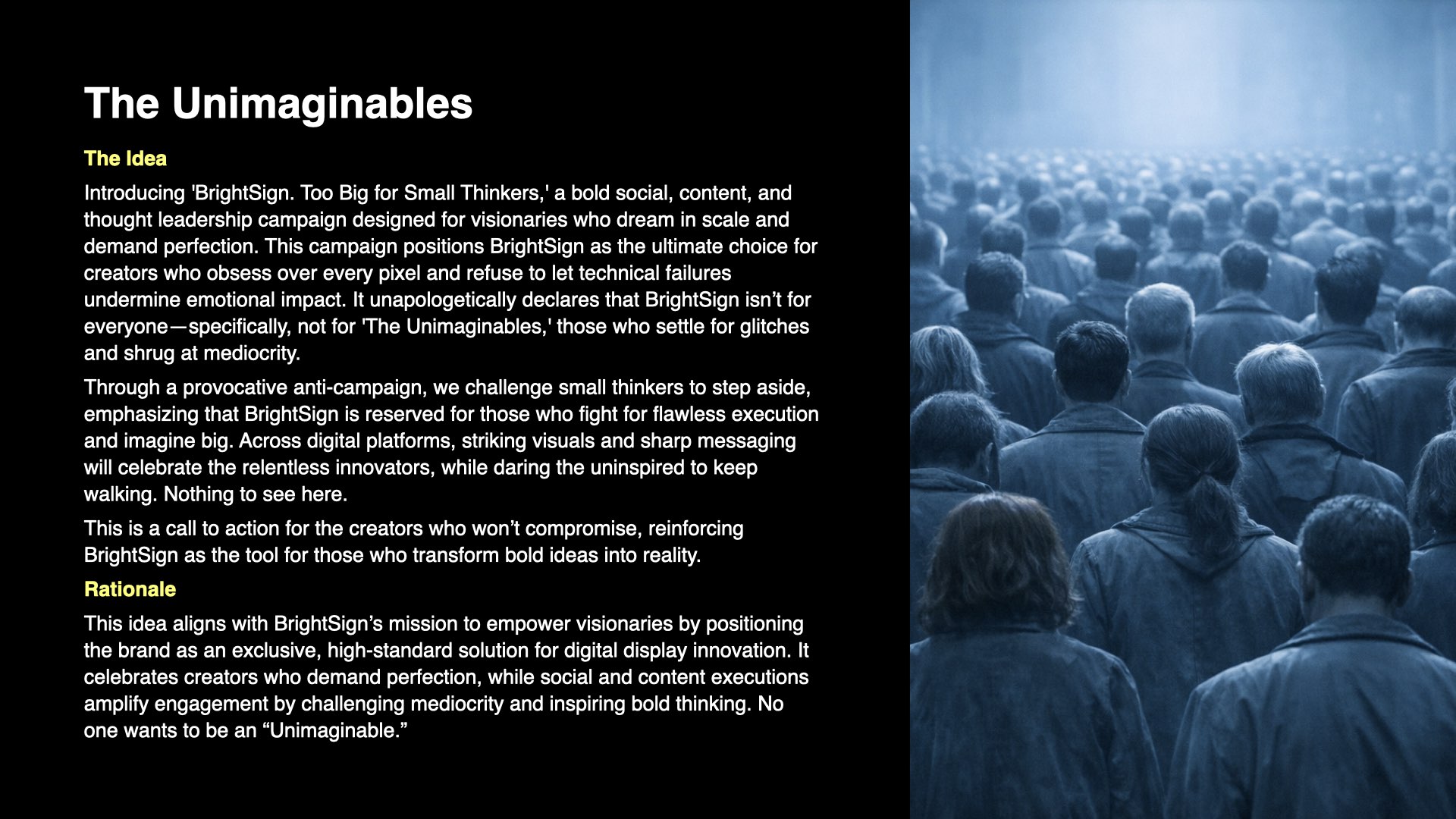
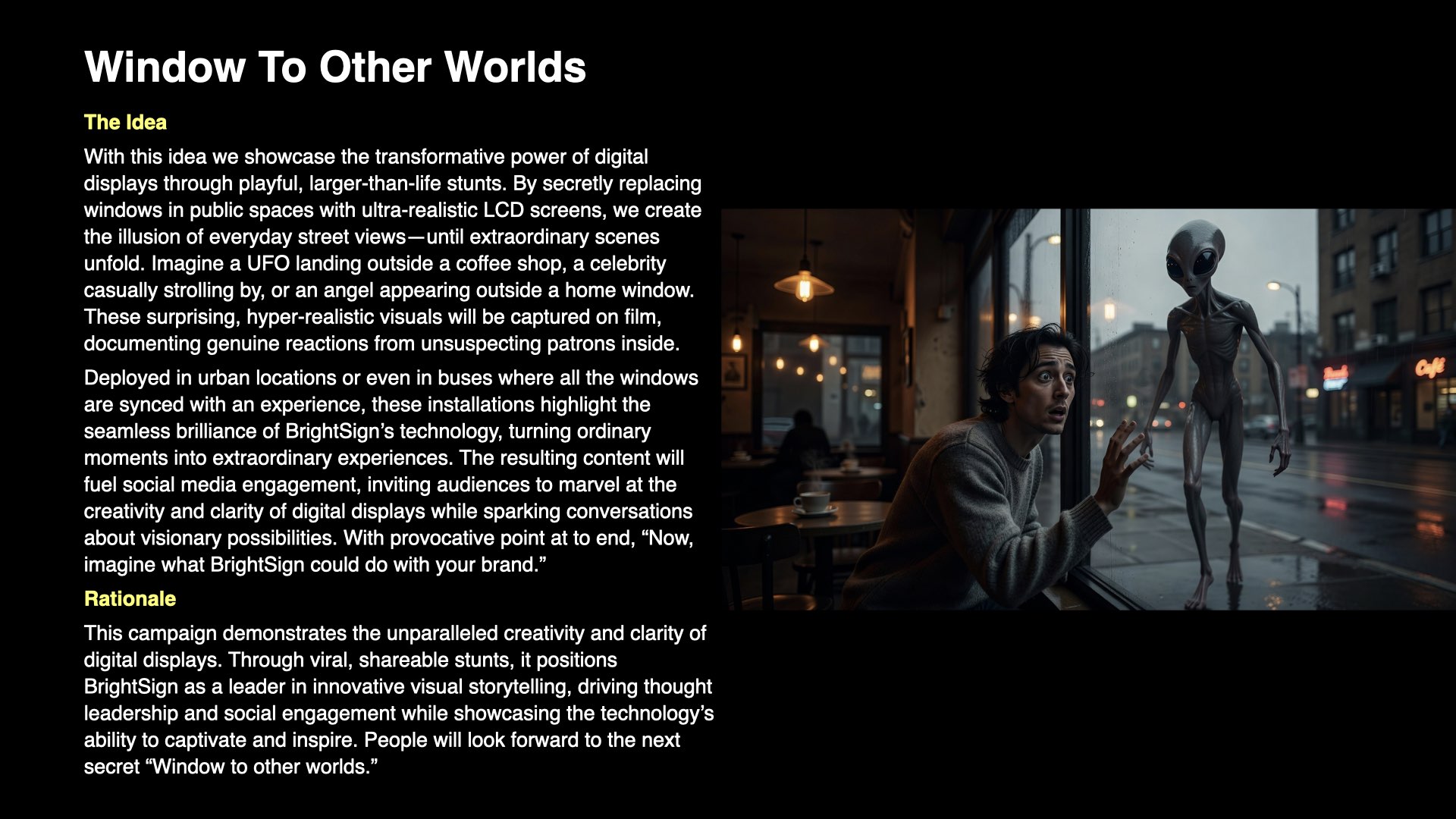
Here are the first-round presentation slides, showing the range of thinking the team brought to the brief.
Move through the carousel to see all the ideas. Click any idea slide to expand.
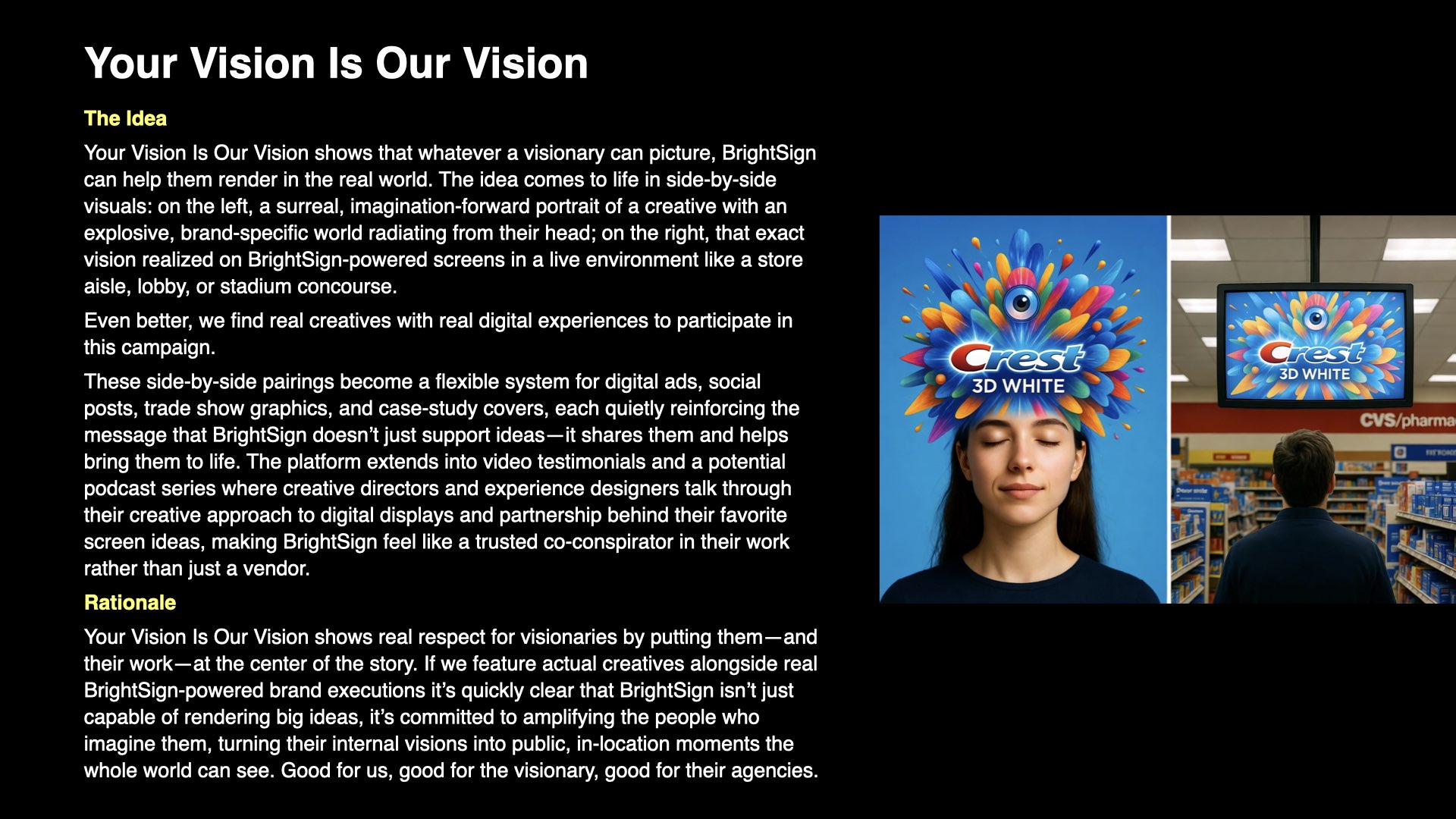
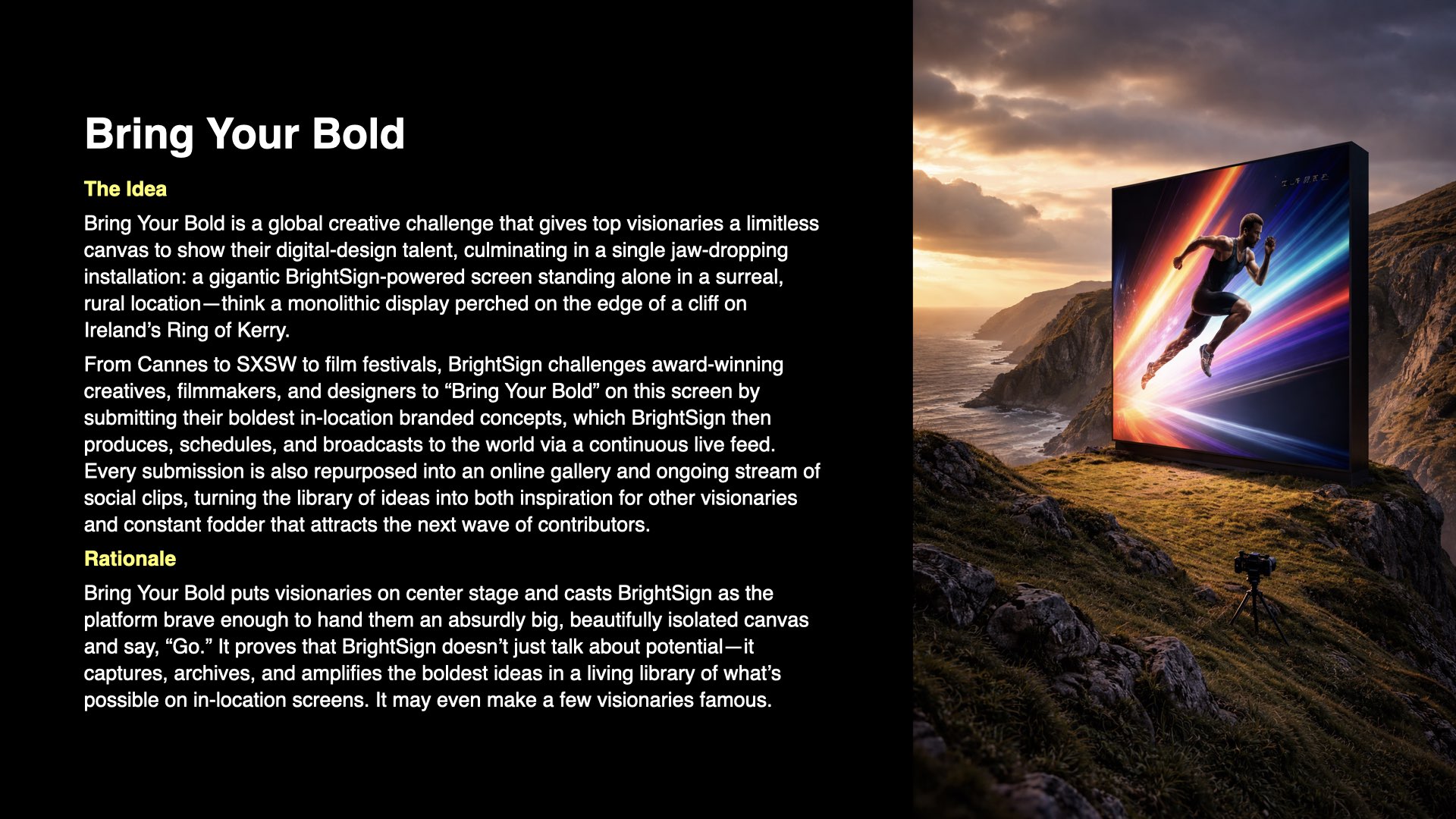
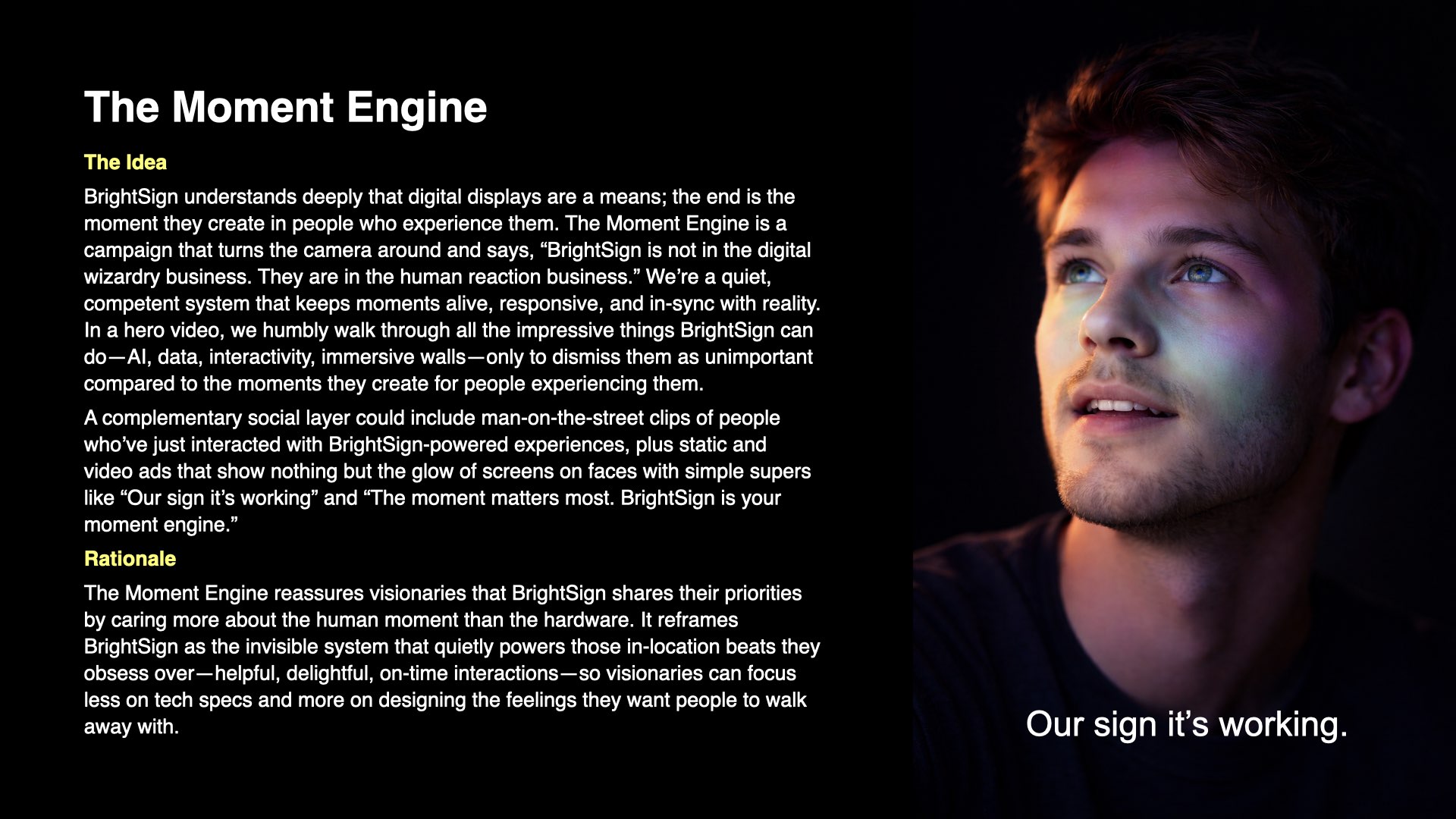
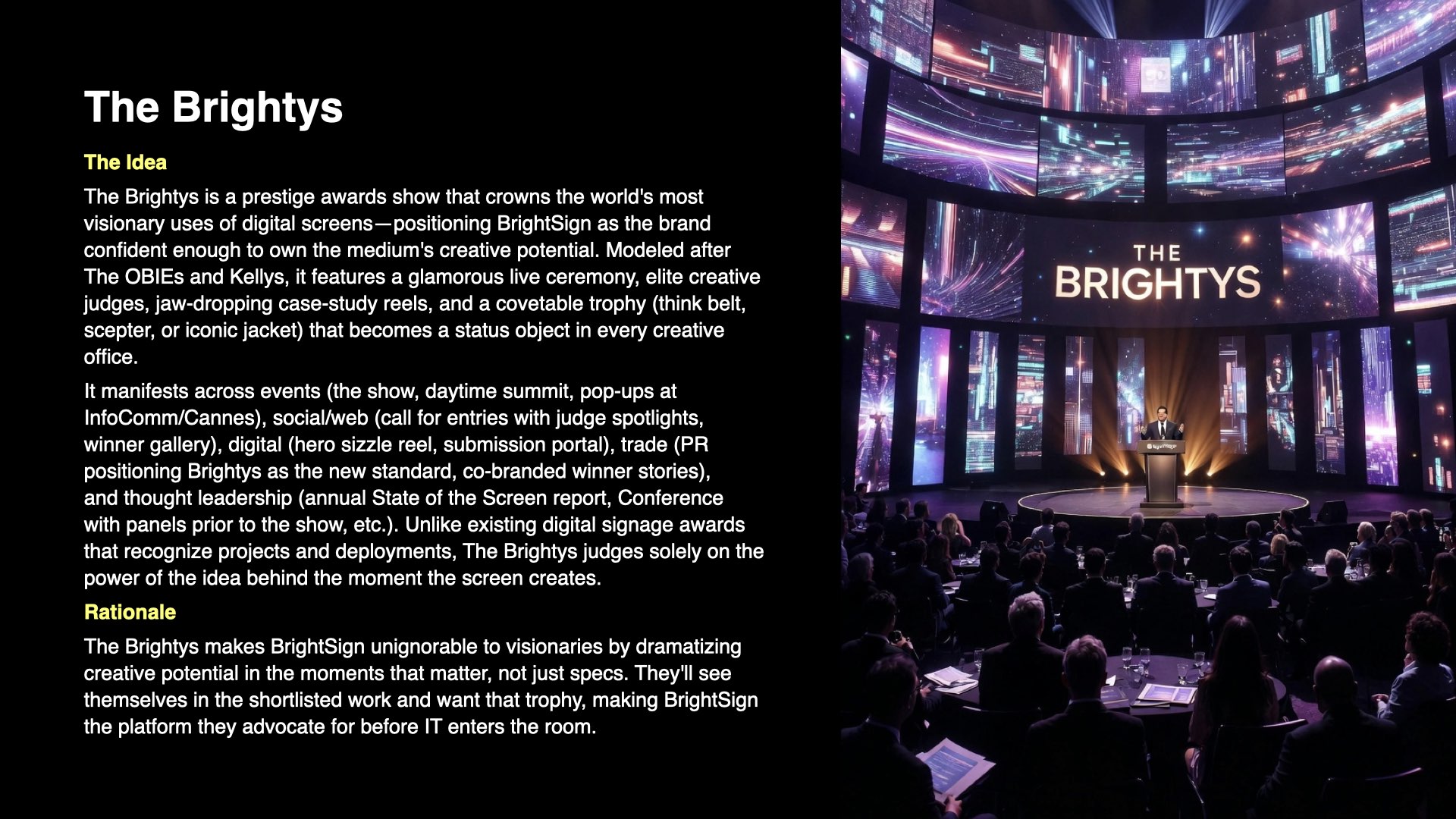
The ideas: Round 2
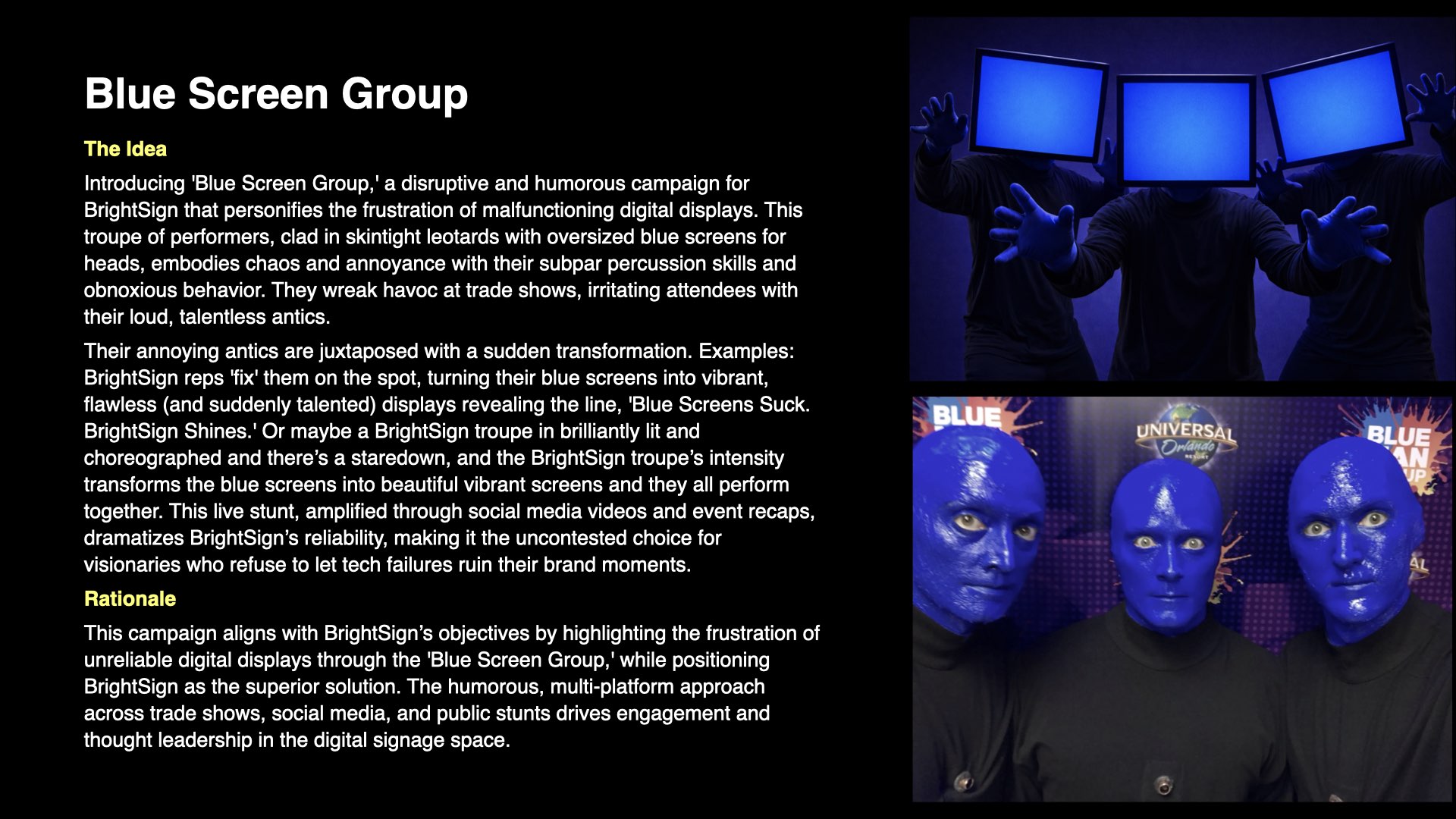
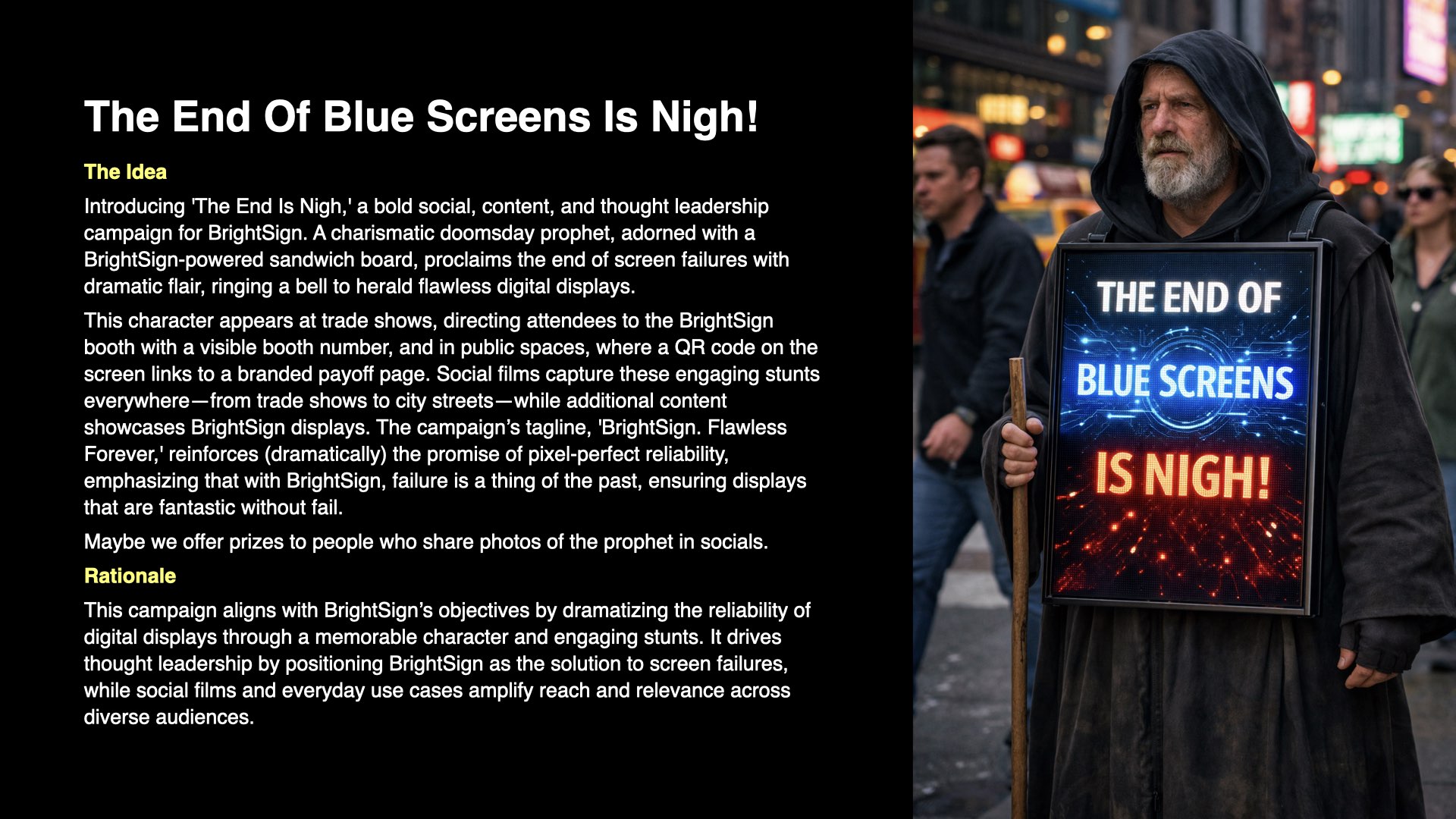
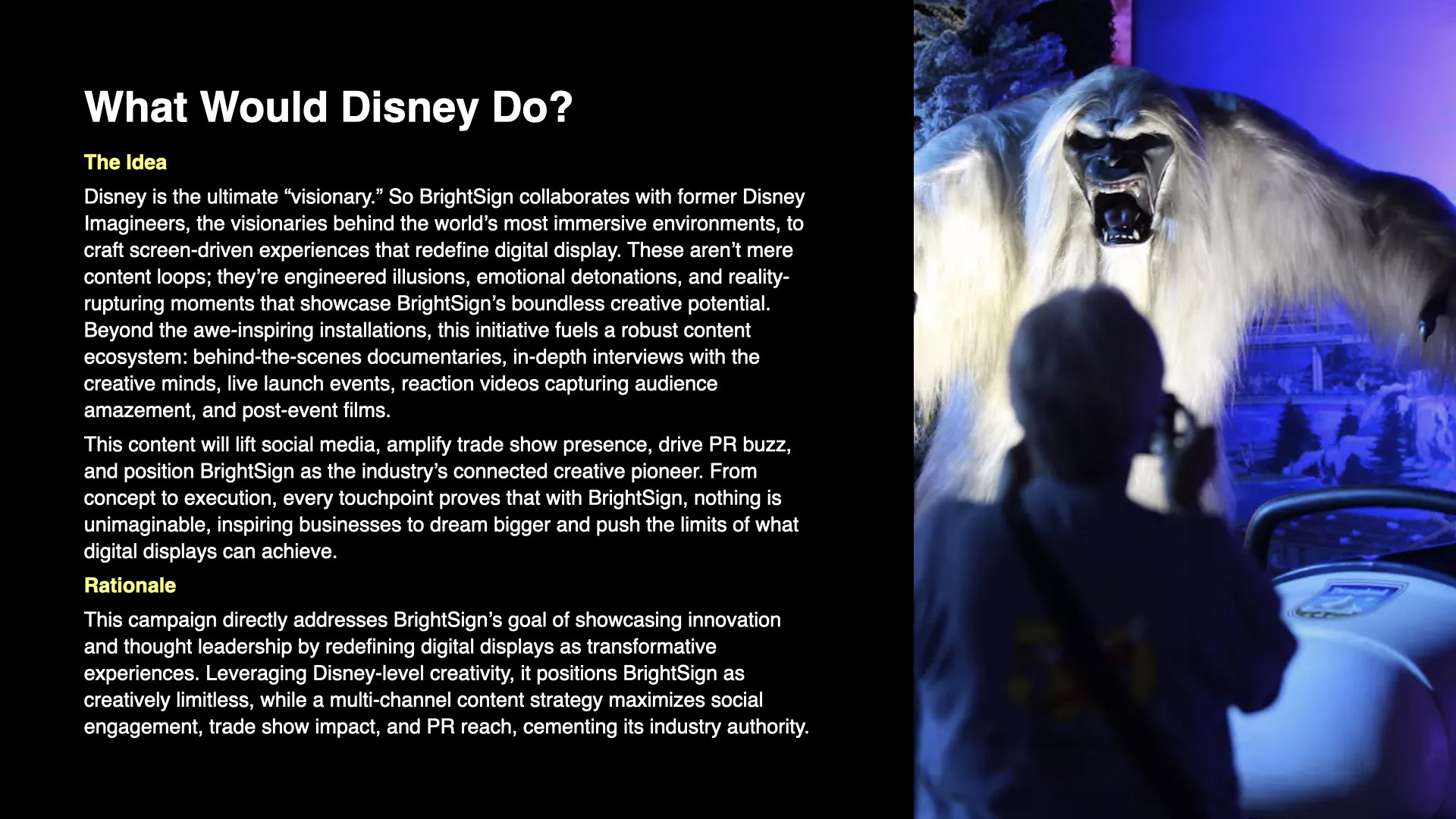
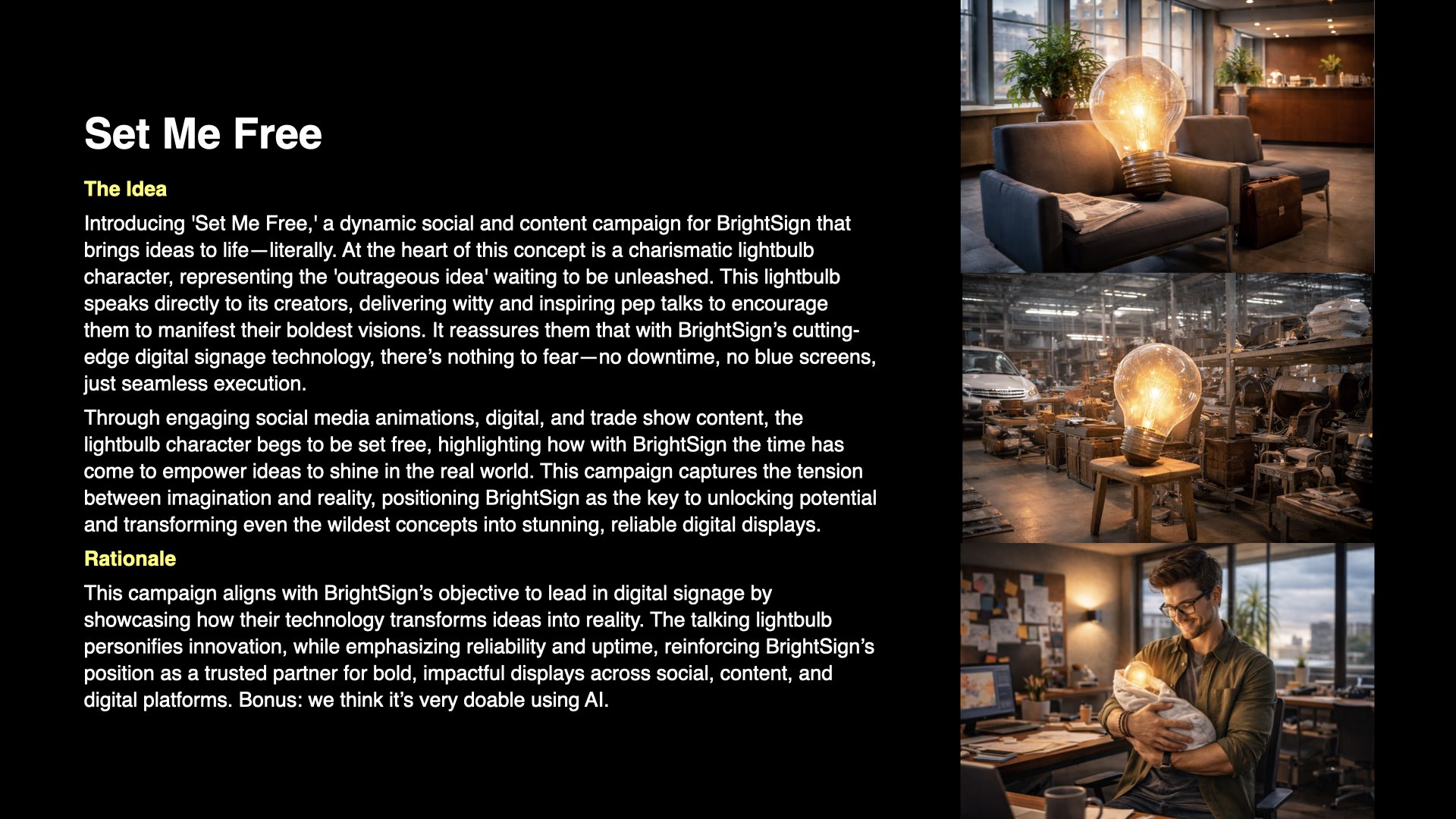
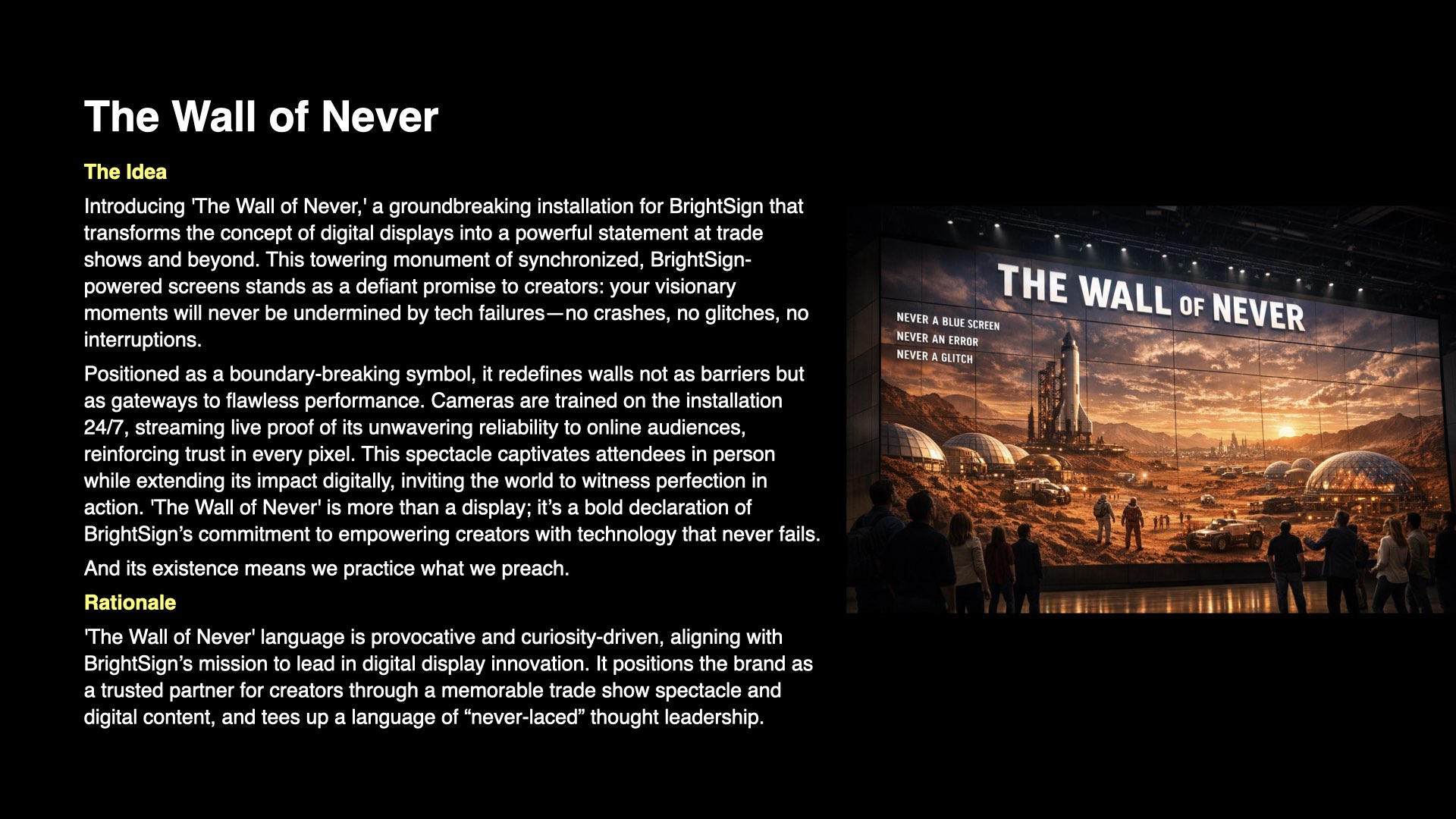
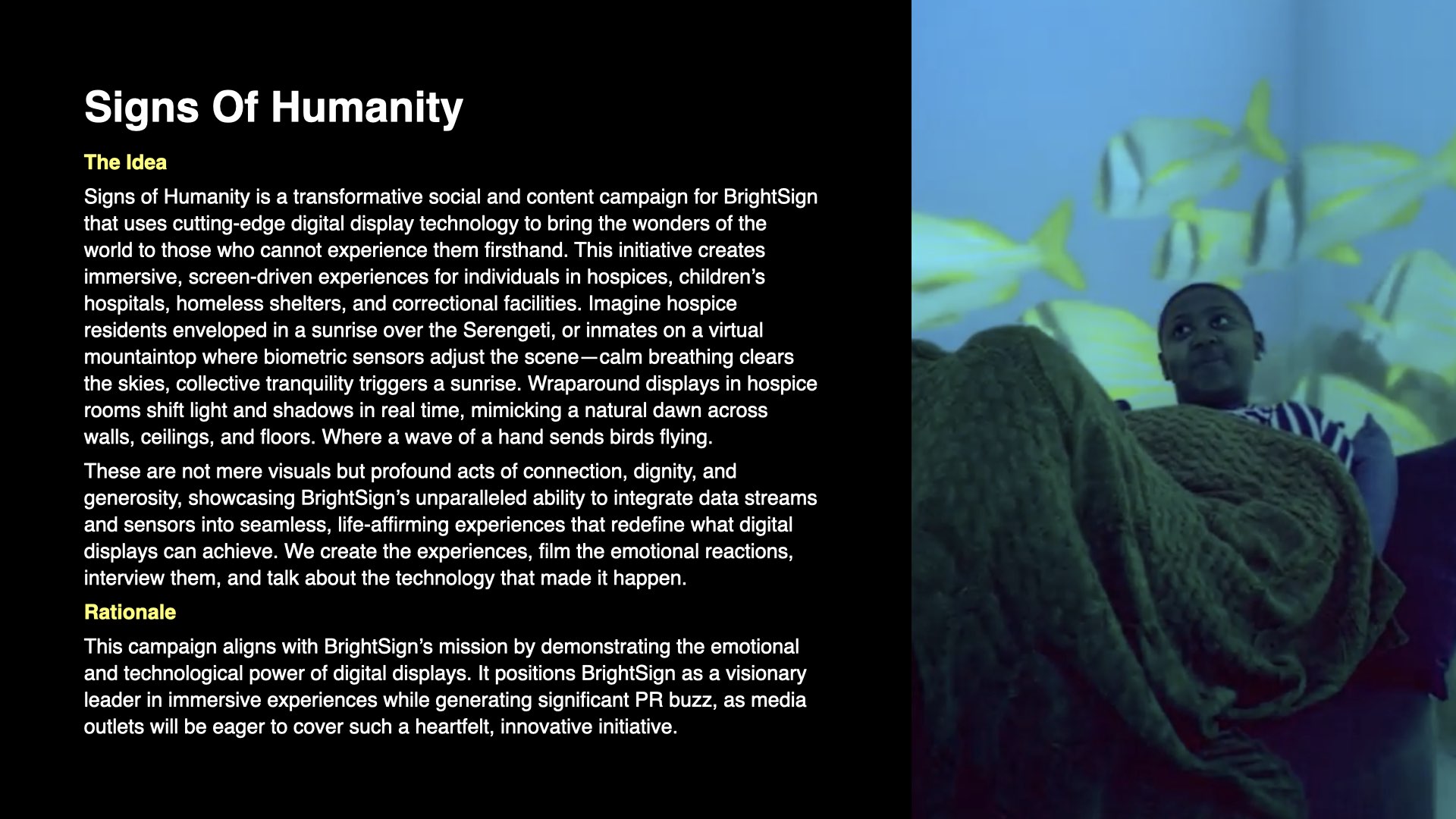
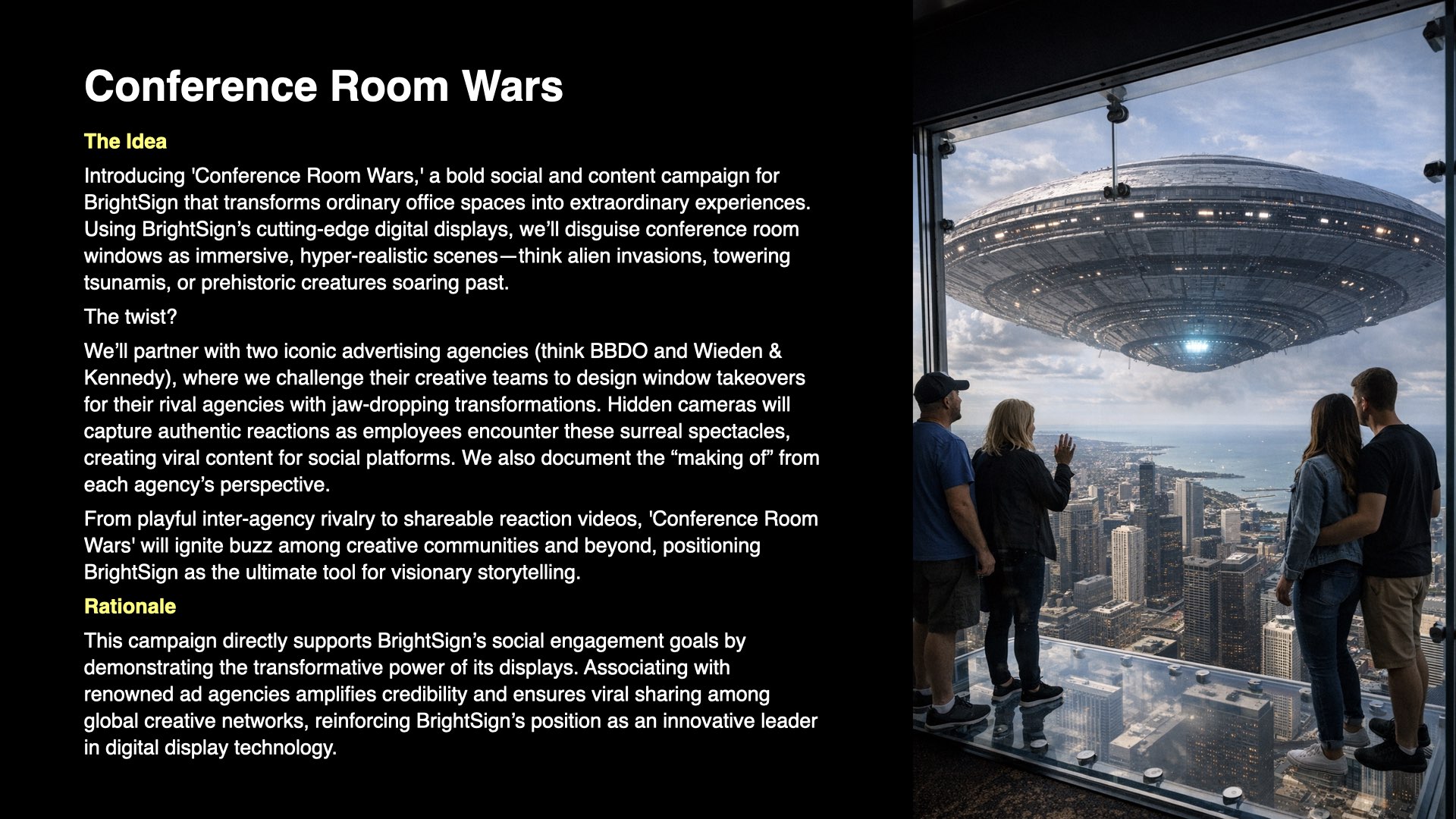
The second round continued the exploration. Here are the presentation slides from that round.
The chosen idea: “The Moment Engine”
The chosen direction, “The Moment Engine,” shifted attention from the technology to its effect on people. The original concept showed faces illuminated by the glow of the BrightSign-powered experiences in front of them. The reaction to the moment was the story.
From “The Moment Engine” to “Meet the moment.”
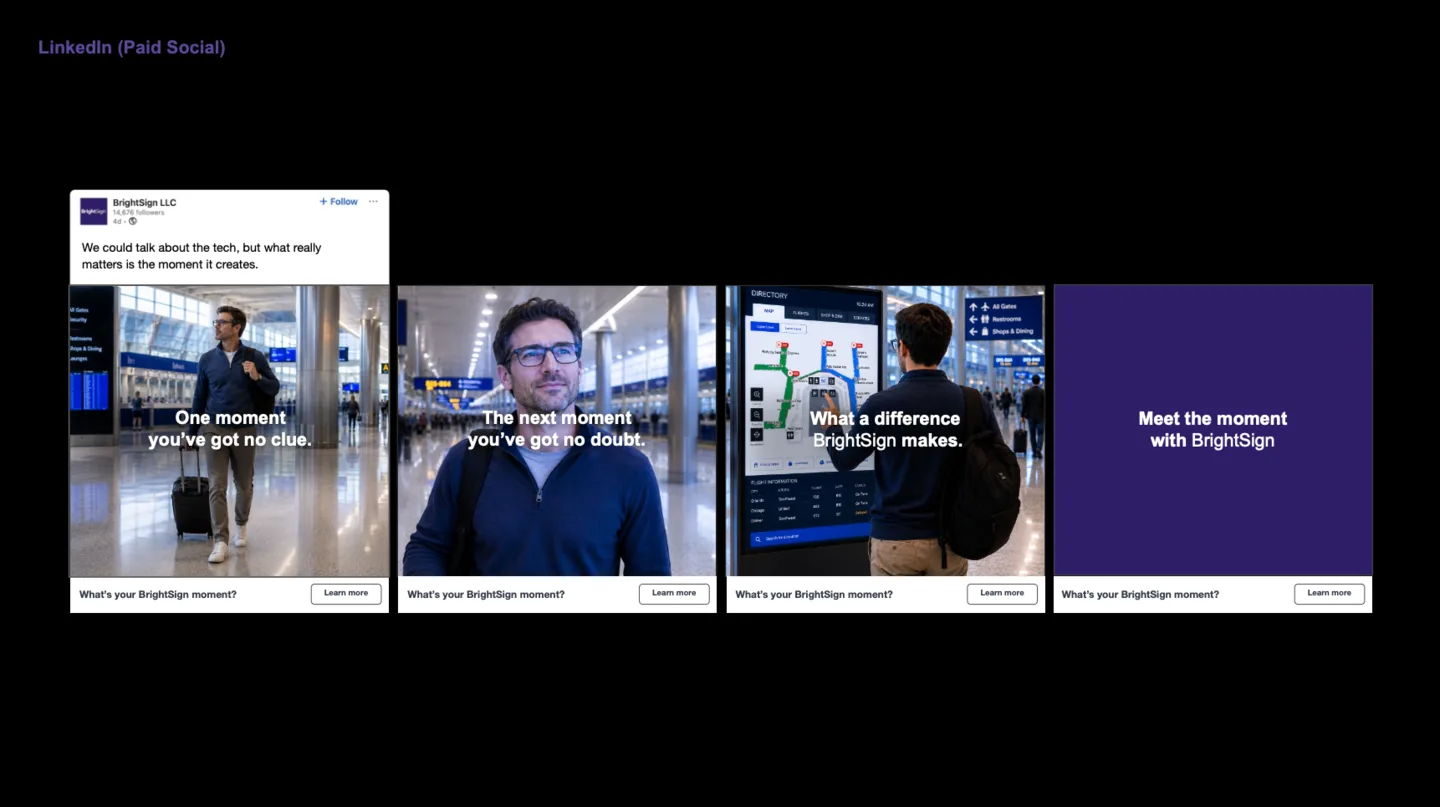
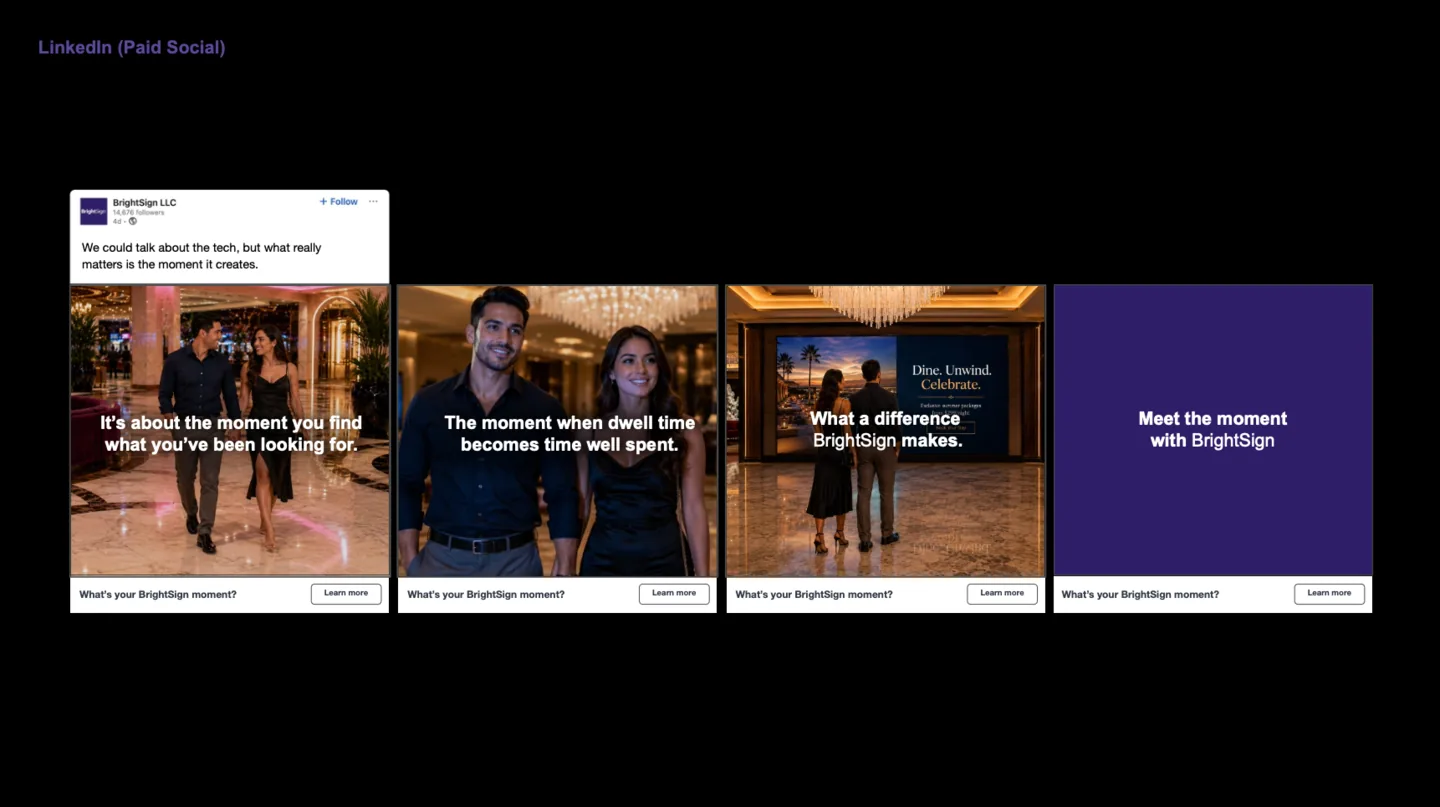
Like good ideas often do, the concept evolved as it moved into production. The finished work brought the thinking into everyday settings, including a shopping mall, an airport, and a hotel.
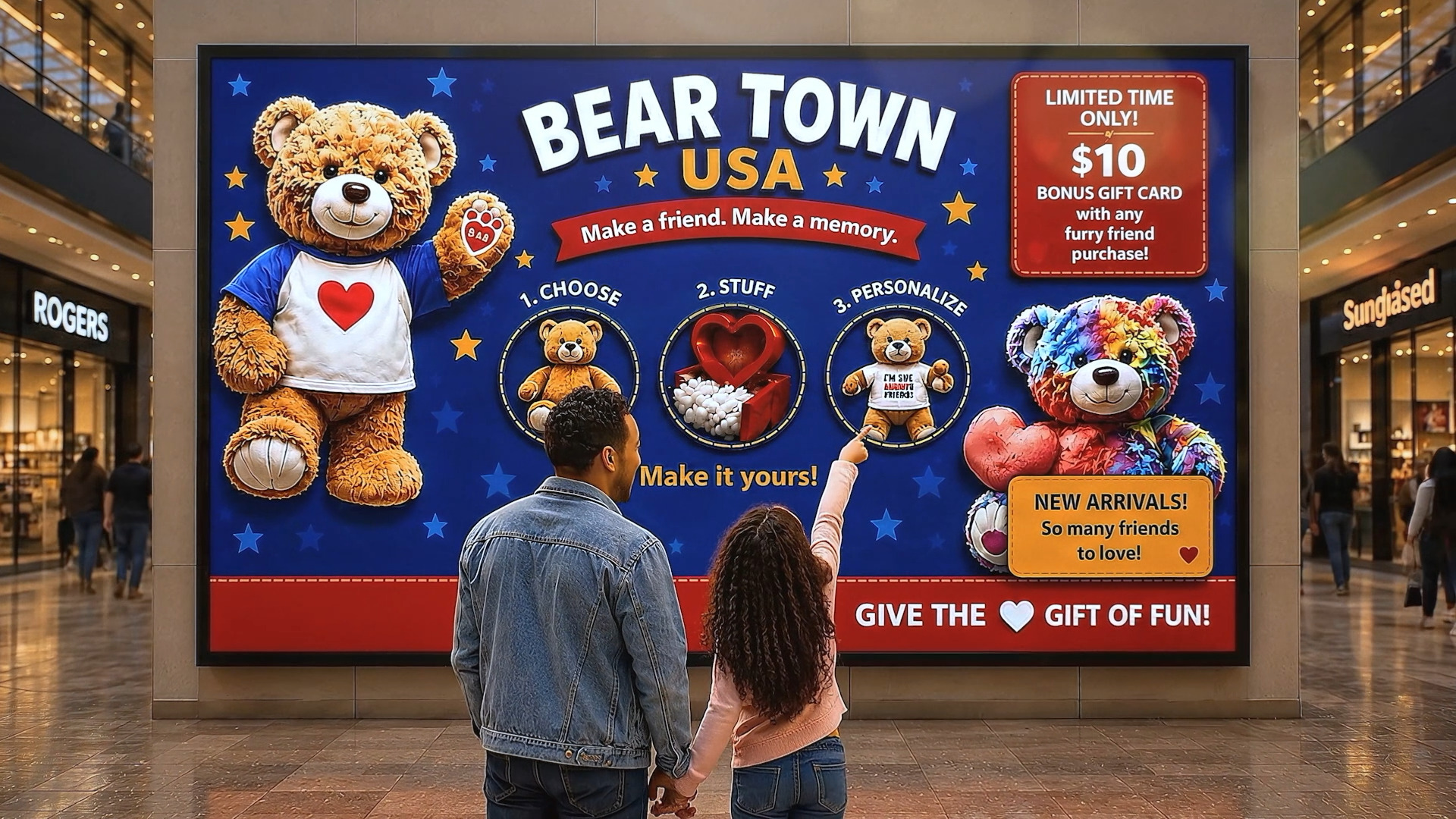
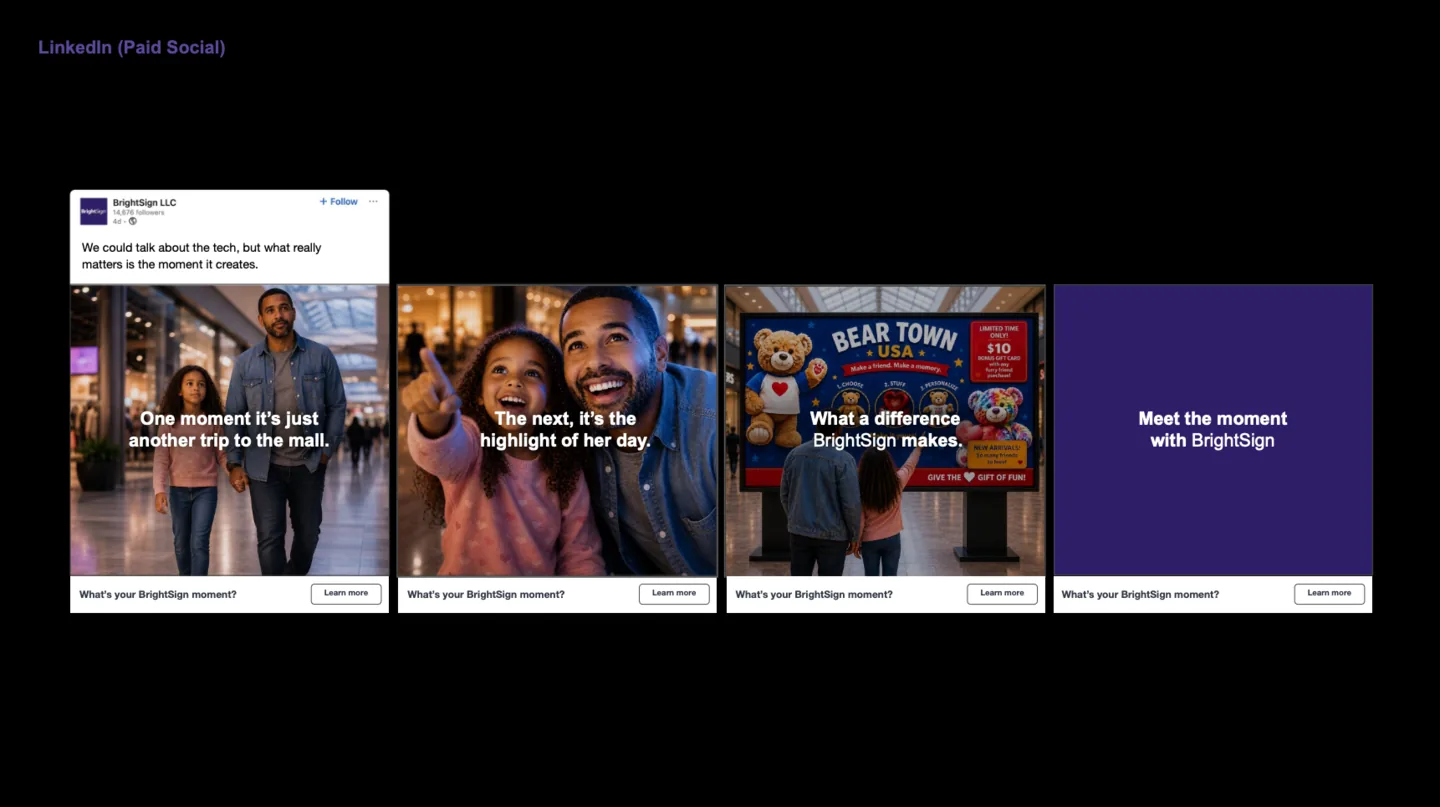
In the mall execution, a father and daughter go from another shopping trip to a moment of delight. The copy makes the shift wonderfully simple: “One moment it's just another trip to the mall. The next, it's the highlight of her day.” The campaign invites people to “Meet the moment with BrightSign.”
It's a different way into a technology story. Instead of asking the audience to admire the machinery, it asks them to recognize something they already care about: a moment that changes how an experience feels.
Mike Howard and Rich Wallace, two members of the original four-person team, continued into production and produced the work entirely with AI. David Safian of SAF Productions produced, with Enno Jacobsen of Enno Edits handling editorial and post - the cut, the finishing, and the work of removing AI artifacts that separates an interesting test from a campaign a client can actually run.
For me, that's the interesting part of this project. The human idea and the AI production aren't competing claims. They're different parts of the same story. The technology gave the team a way to execute; the creative judgment gave them something worth executing.
Finished work:
The LinkedIn social carousels
What BrightSign valued
Laura Smith, Head of Integrated Marketing, described the experience this way:
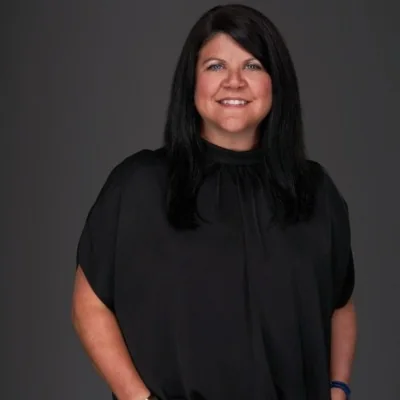
Laura Smith,
Head of Integrated Marketing
The biggest thing for us was access — getting top-tier creative talent, real strategic thinkers, without the usual cost or complexity. The process was refreshingly easy.
Access to the right people. A clear problem to solve. Room to explore more than one answer. Then a path from the chosen idea to finished work.
BrightSign gave us a great example of what can happen when human creativity leads and technology helps bring it to life. If your brand has an impressive product but needs a more compelling way to make people care, let's talk about what IX Concierge could help you uncover.