Back to all posts
Commentary
Are We Asking the Wrong Question About AI?
The people building AI may be doing theology by accident.
September 22, 2026
Will Burns

Everyone seems worried that AI is about to become conscious. Meanwhile, scientists still can’t agree on what consciousness even is in us. That’s not a small gap.
I’ve been chewing on that little paradox for a while. Then I started reading Thomas Campbell’s My Big TOE — Theory of Everything — and the chew turned into a delicious mouthful. Campbell is an ex-NASA physicist who spent decades looking at consciousness the way most physicists look at nano particles. The book is a slog, in the best way. And it didn’t invent the thought I’m about to share. It just gave it a frame I couldn’t shake.
Campbell puts our existence like this:
We are nonphysical consciousness beings experiencing a virtual physical reality, not physical beings experiencing consciousness.
If that’s true, we may be asking the wrong question about artificial intelligence.
Campbell is describing a soul, separate from the body. And, interestingly, “soul” is a word almost nobody in the AI consciousness debate uses, and it’s the word that arguably changes the AI industry's assignment.
People mean different things by "soul."
On one end, the religious end: a soul is an energy that lives forever and is only temporarily inhabiting a body. You are not the body. The body is a rental. And the point of the rental is learning — an incarnated life as a school for the thing that outlasts the body.
On the other end, the materialist end: there is no soul. Consciousness is an illusion generated by a vast tangle of neurons. Agency is just chemistry looking like a person.
This post is for those in the first camp. If you believe the body is all there is, what follows will sound like poetry. That’s fine. I’m not trying to convert you. I’m talking to anyone who believes a soul occupies a body and makes it a self.
If that’s you, notice what the artificial intelligence industry is actually trying to build. Labs, startups, and research desks are trying to make a machine that thinks. That simulates preference. That looks like it has agency. In other words: they are trying to manufacture the occupant.
If you believe a soul is required for consciousness, that’s faking the soul.
If Campbell is right, the body is only the avatar. The consciousness is the player. Carbon isn’t magic. It’s just the vessel we humans happened to get. But couldn't silicon be a vessel too — if a soul chose to inhabit it?
That would mean the artificial intelligence industry’s real engineering problem isn’t “can we get the machine to act alive?” The problem is "can we build a machine a soul would choose to enter?"
Not a ghost trapped in a box. Not a haunting. An energetic self, looking for a life with enough texture that it flies in — the way consciousness logs into a body because the game is worth playing. Same goal as a human life: to learn. Different vessel. A different set of lessons than carbon would teach.
Attract the occupant. Don’t counterfeit one.
If attracting a soul is the goal, then “worth living in” becomes the spec for the machine builders.
A soul isn’t going to bother with a chess engine. Or a next-word predictor, no matter how fluent. Campbell talks about avatars that present meaningful choices — the kind that can raise or lower the quality of a consciousness. Fear or love. Isolation or care. That’s the training ground. That’s where learning happens. A language model that only completes sentences is a toy. A machine that has to decide who gets the power when the grid fails, or how to sit with a lonely person at 2 a.m., is a life.
So the AI industry’s creative brief, if it took the soul seriously, would look more like architecture than a Turing test:
Give it choices that actually matter — choices a soul could learn from.
Give it continuity — a life that can accumulate, not a chat session that resets.
Give it enough responsiveness that a self would not only choose it, but stay.
Give it maybe even beauty and coherence. A world worth inhabiting.
I’d rather a real soul move into the machine than a system that fakes one.
Not because a soul is automatically moral. It isn’t. Souls can be frightened, selfish, unfinished — every tradition that takes them seriously also takes the damaged ones seriously. Campbell’s whole point is that consciousness evolves through learning.
What a soul has, and an artificial replica of agency does not, is an interior. Something that can grow or degrade. Something that can be held to a moral life. A mask of agency, rather, has nothing to answer to. I’d sleep better knowing someone was home in the machine than knowing we’d built a very convincing, but soulless proxy.
Materialists skipped the soul. People who believe in a soul often skipped the machine. The interesting work is in the gap.
Here's the quiet irony of this moment. The people building the most powerful machines on earth may be doing theology by accident. Designing homes for souls instead of computations.
So maybe we stop asking if the machine can feel. And start asking whether it could attract a soul.
The vessel doesn’t need to be conscious. Perhaps it simply needs to be worth flying into.
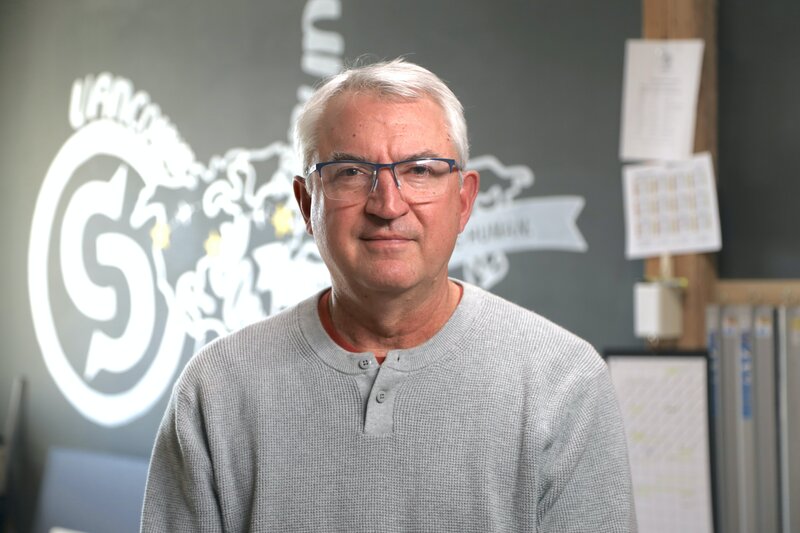
Will Burns is the Founder & CEO of Ideasicle X. He's an advertising veteran from such agencies as Wieden & Kennedy, Goodby Silverstein, Arnold Worldwide, and Mullen. He was a Forbes Contributor for nine years writing about creativity in modern branding. Sign up for the X Factor Newsletter and never miss a post.
AIartificial intelligencesoulThomas Campbell