Stop Trying to Be Creative. Start Hacking It.

13 studies on what actually makes you more creative — and how to build your day around them.
Everyone talks about hacking productivity. Fewer people talk about hacking creativity. But the science is out there — and it's surprisingly practical. Over the years we've been collecting scientific studies that specifically relate to improving human creativity. What follows is our attempt to apply all of them to a single creative professional's day, structured around when each study would do the most good.
Morning Setup — Before you open your laptop
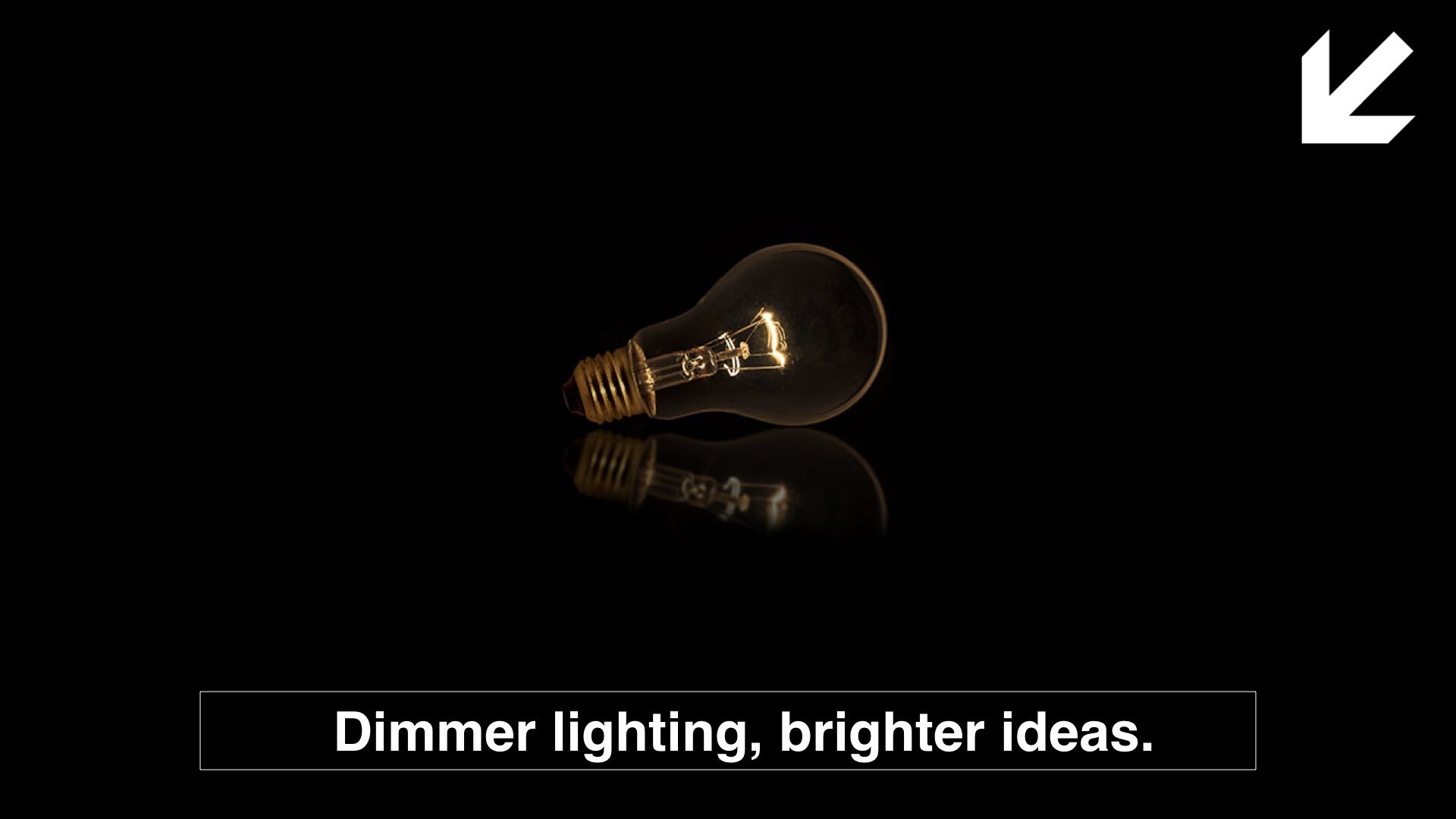
Dim the lights
Anna Steidle of the University of Stuttgart found that dimly lit rooms yield better creative thinking than brightly lit ones. Her hypothesis: the more invisible we feel, the less self-conscious we become — and the less fearful we are of new ideas. So before you flood the room with light, give yourself a dimmer start to the day. Source
Put something green in your sightline
A study out of the University of Munich proved that priming subjects with the color green prior to creativity tests improved creative performance. No definitive explanation why. But it works. A plant, a screensaver, a green mug. Whatever you've got. Source
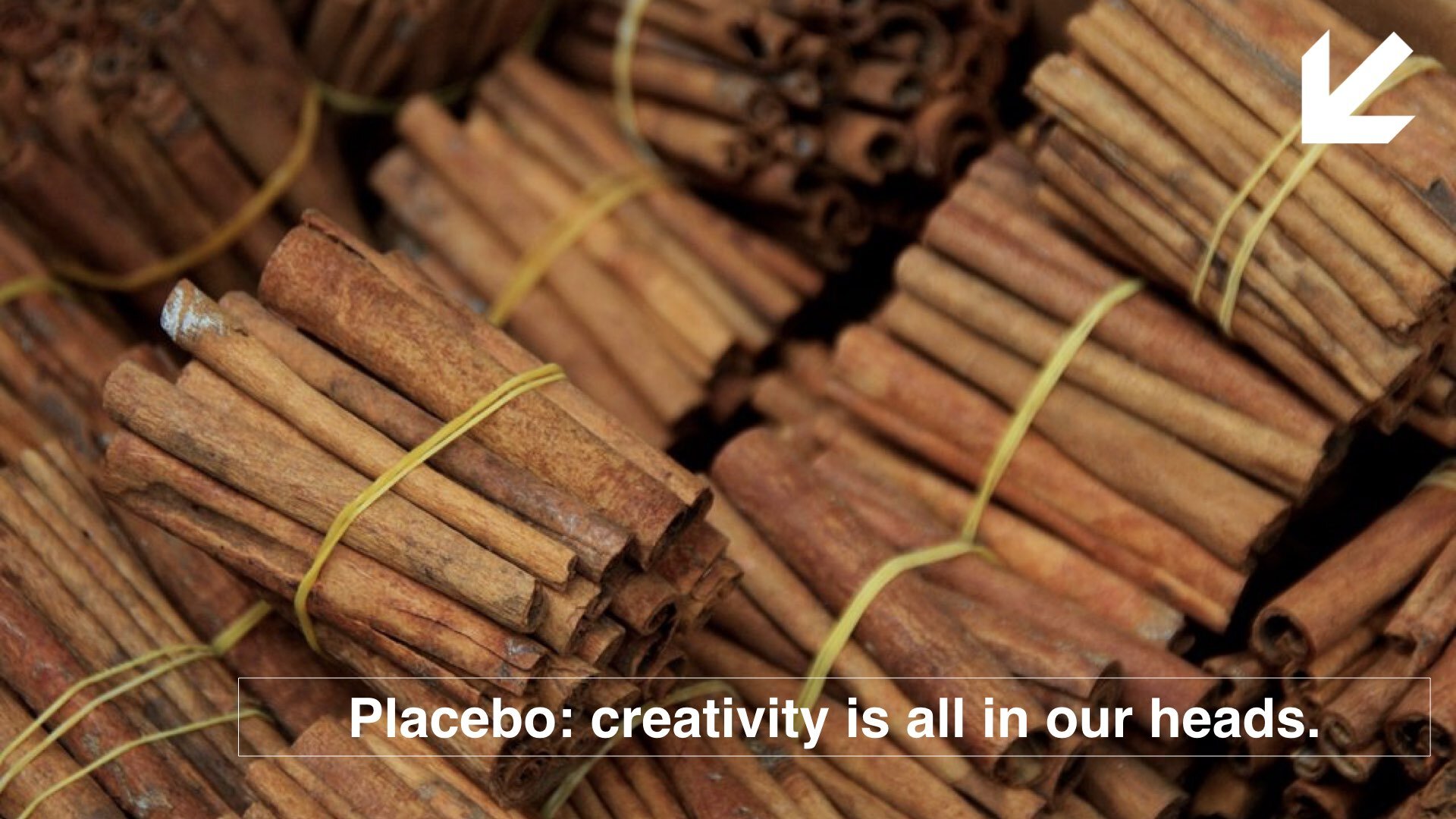
Make your morning ritual feel like a creativity ritual
Researchers at the Weizmann Institute of Science used the aroma of cinnamon to trick subjects into believing they'd received a creativity enhancement. It was only cinnamon — but the improved creative output was real. If you genuinely believe your morning routine primes you for creative thinking, it actually will. Make it feel intentional. Source
The Morning Walk — Commute or otherwise
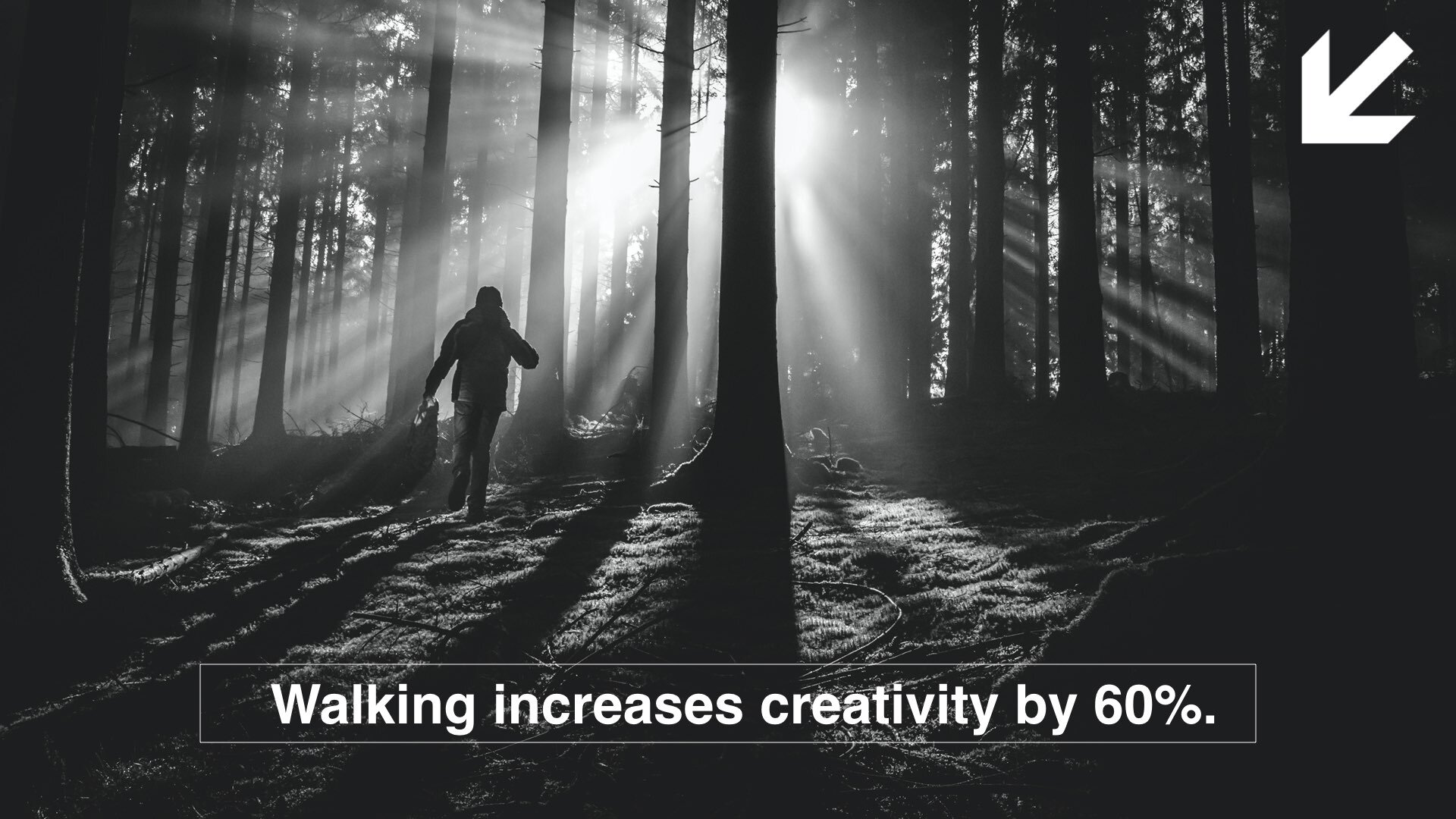
Walk. Anywhere.
Research out of Stanford found that people are 60% more creative while walking — indoors, outdoors, or on a treadmill. Walking gives your working memory something minor to focus on, making it less likely to weed out "irrelevant" thoughts. Those irrelevant thoughts are often your best ones. Source

Leave your phone in your pocket
Neuroimaging research from Social Cognitive and Affective Neuroscience found that smartphone addiction directly impairs creative cognition. When your attention is captured by your phone, your mind can't wander — and wandering is exactly how ideas find you. Walk + No Phone = compounding effect. Source
Morning Work Block — 9am to Noon
Save your analytical work for mornings
Counterintuitive finding from Mareike Wieth at Albion College: insight problem solving is consistently better during non-optimal times of day — when you're tired. Your sharpest hours actually work against creative thinking because your brain filters out "irrelevant" thoughts too efficiently. Sharp brain = narrow thinking. Do your emails, spreadsheets, and reporting in the morning when you're at your cognitive peak. Save the big creative challenge for when you're fading. Source
Don't schedule brainstorms in tight windows
Three separate studies (Amabile, 1996; Hülsheger et al., 2009; Paulus & Dzindolet, 2008) show that time pressure significantly reduces group creative output. The classic 2pm–4pm Tuesday brainstorm has artificial urgency baked right into it — and that urgency is working against you before anyone walks in the room. Brief the team, give them time to breathe and think independently, then reconvene.
This is precisely why IX Original is structured the way it is: projects are time-deferred by design. No gun to the head. The team gets briefed, goes off and thinks, and ideas accumulate naturally — teams regularly produce 30+ ideas in 24 hours without anyone in the same room.
Lunch Break

Work from a coffee shop
Researchers at the University of British Columbia and the University of Virginia found that moderate ambient noise — the kind you'd hear in a coffee shop — boosts creative output. Just enough distraction to occupy your working memory without overwhelming it. If you're hitting a wall, a change of scene to somewhere with that low-level hum is a scientifically sound move. Source
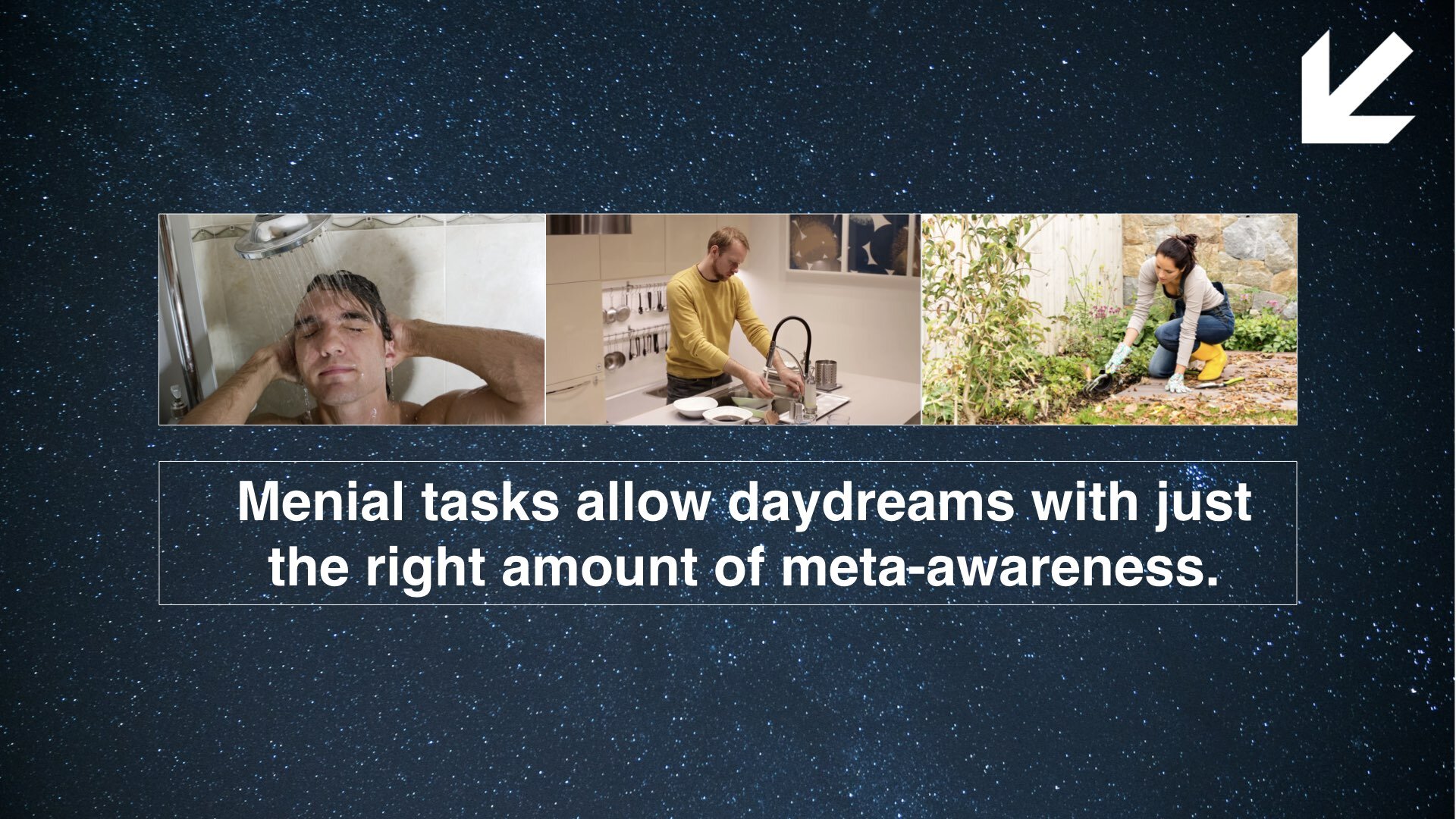
Do something mindless
The Schooler Lab at UC Santa Barbara found that daydreaming is most productive when tethered to a low-level task — washing dishes, gardening, a shower. These activities occupy just enough working memory to prevent hard focus, which lets more "irrelevant" thoughts surface. Take a real lunch break. Don't optimize it. Source

Mentally teleport somewhere
Research on psychological distance shows that anything you don't experience as happening right now, right here, to you directly loosens creative thinking. Simply imagining yourself in the Sahara Desert — even briefly — measurably frees up your mind. The more exotic the mental destination, the better. Source
The Afternoon Slump — 2pm to 4pm (Actually Your Creative Peak)
Lean into the grogginess
Here's where the Albion College study pays off. That post-lunch fog everyone fights against? Not a bug — a feature. Your working memory is slightly compromised, your filter is looser, and ideas you'd normally dismiss are getting through. This is the best time to tackle your hardest creative problems.
And if you want a creative sparring partner during that window, IX Spark is built for exactly this moment. Just type a simple idea request and get a full slate of responses to react to, push back on, or use as a springboard. Sometimes you just need something on the table to argue with. Source
Team Time — Whenever that happens
Appreciate your "scattered" teammates
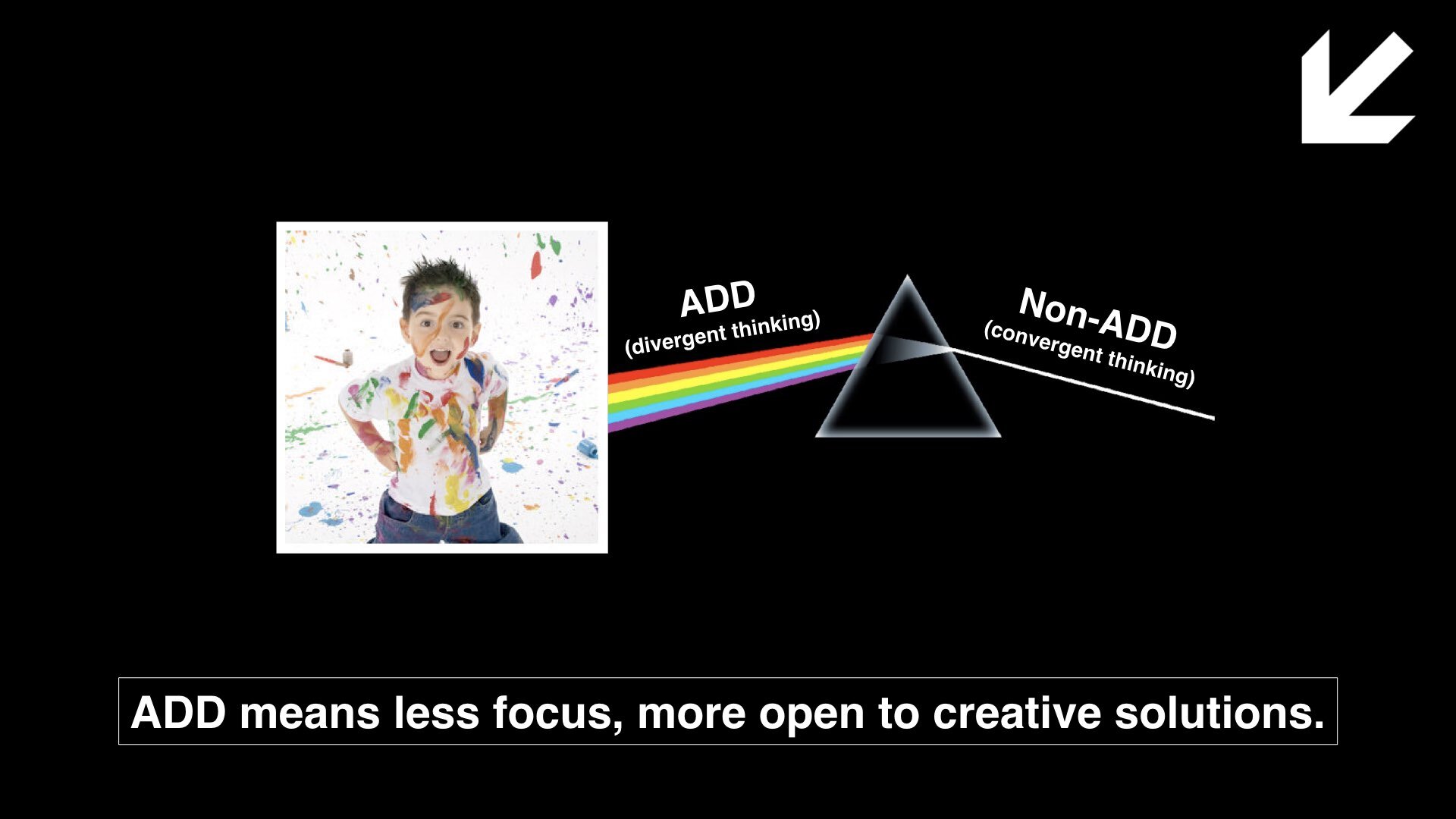
Research from Shelley Carson at Harvard and Jordan Peterson at the University of Toronto found that people with reduced latent inhibition — the ability to filter out "irrelevant" information — demonstrate measurably greater creative achievement. In plain English: the person on your team who seems distracted, goes on tangents, and makes odd connections may be your most creative asset. Resist the urge to redirect them. Source
Evening

That after-work drink is scientifically defensible
Professor Andrew Jarosz of Mississippi State University found that subjects brought to exactly 0.08% blood alcohol level were better able to solve creative problems. The mechanism is the same as most of these studies: impaired working memory means less filtering, which means more ideas. We're not prescribing anything here. But the science backs you up. Source

End the day expecting good things
Richard Wiseman's study on luck is our personal favorite. He found that luck isn't an external force — it comes from your outlook. People who consider themselves lucky are more likely to notice unexpected opportunities and stay open to new information. An idea, after all, is a good thing that "happens" to you. Set yourself up for it. Source
Bonus — Whenever you can get to it
Floatation therapy
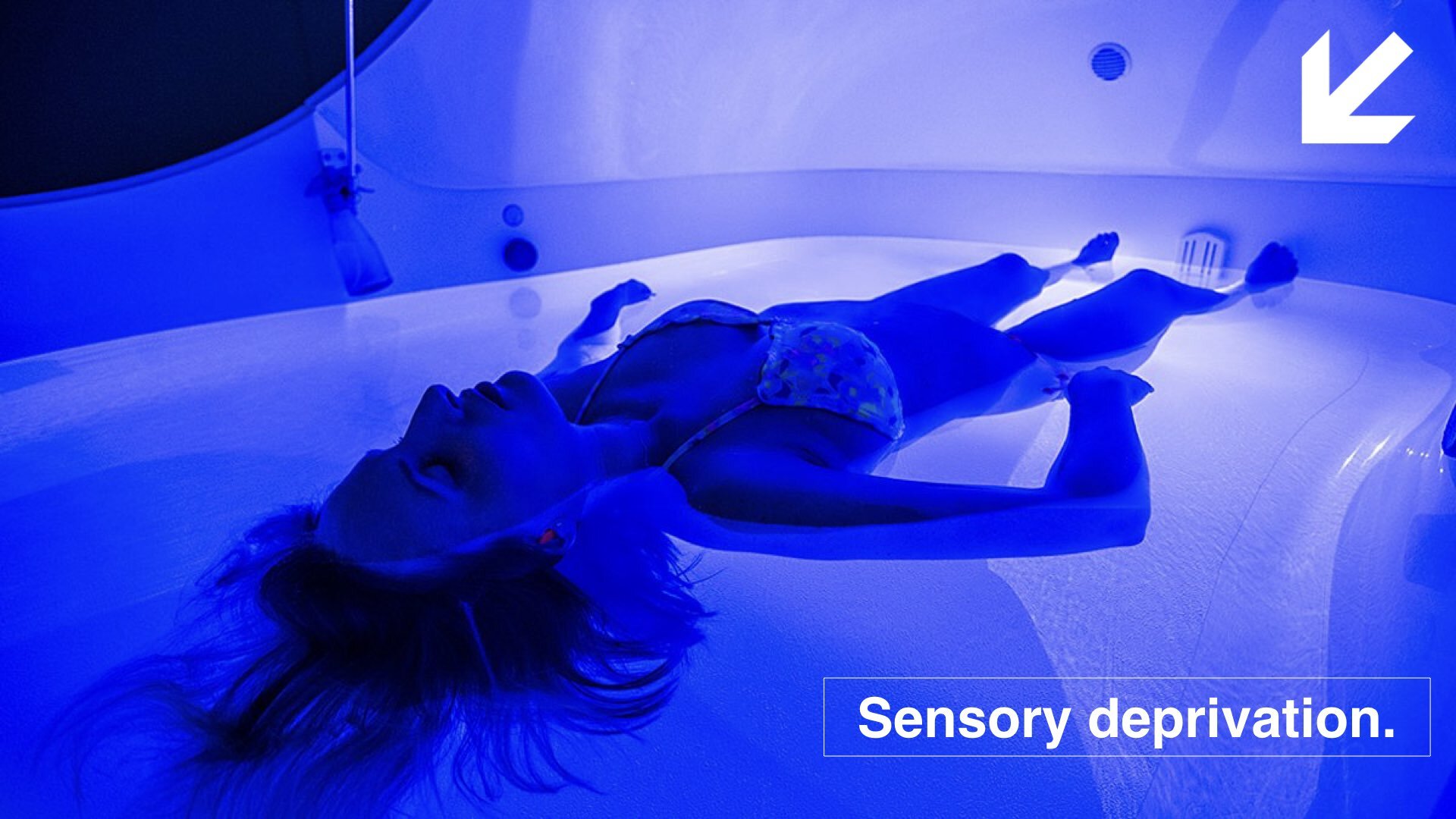
Donal and Deborah Forgays found that by eliminating all incoming sensory noise, floatation therapy leaves the mind entirely open for what they called "inside-out" creativity. With nothing to react to, the brain turns inward. Harder to schedule than a walk, but for those who've tried it, the results are striking. Source
One last thing.
We're not actually expecting anyone to do all of this in a single day. That would be exhausting, and frankly, a bit unhinged. The point is to experiment. Try two or three. See what moves the needle for your particular creative brain — because everyone's creativity runs differently. Some people find their flow in dim coffee shops; others on a morning walk (I've been walking 3 miles every morning since I saw that study!) with their phone tucked away. Find your stack.
And if all else fails, you can always call us. With IX Breakthrough, we'll come back with 10+ ideas from world-class creatives using our IX Original platform — which, by the way, has IX Spark embedded right into it. Sometimes the best creativity hack is knowing when to bring in the professionals.
As always, nothing is unthinkable.

Will Burns is the Founder & CEO of Ideasicle X. He's an advertising veteran from such agencies as Wieden & Kennedy, Goodby Silverstein, Arnold Worldwide, and Mullen. He was a Forbes Contributor for nine years writing about creativity in modern branding. Sign up for the X Factor Newsletter and never miss a post.